Water Damage Restoration PlanoPlano, TX(972) 945-2118

Slab Leak Water Damage Cleanup in Plano, TX

A leak under the slab doesn't flood a room. It seeps. For weeks it can soak carpet pad, lift tile, cup hardwood and wick into the bottom of your walls before anything looks wrong. Plano's shifting clay makes these leaks common. Once your plumber finds and repairs the line, we map how far the water spread and dry the floors, walls and slab, so the damage doesn't keep growing underneath.

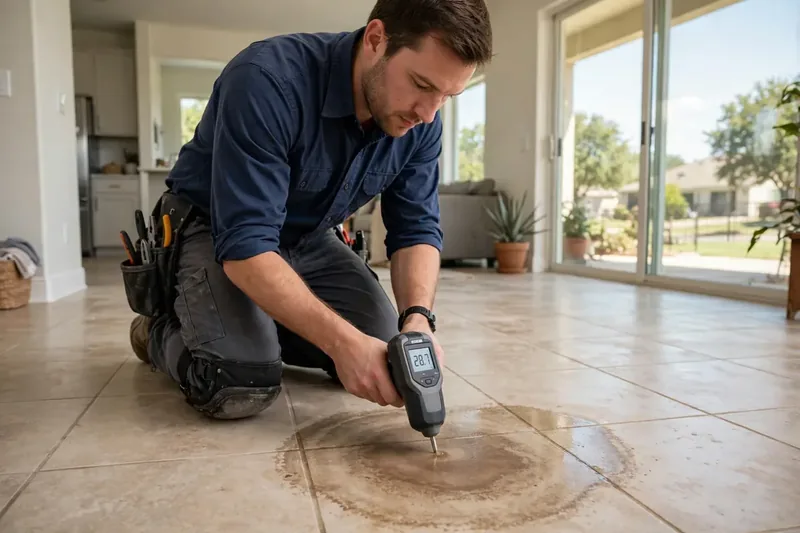
Technician checking a tile floor for a slab leak with a meter
  • Local technicians
  • Written scope
  • Moisture monitoring
  • 24/7 emergency response

Signs of a Slab Leak in Your Home

  • A warm or hot spot on the floor, most often from a leaking hot-water line. Our guide on a warm spot on the floor explains what it means.
  • Damp carpet or a wet pad with no spill, pipe or appliance nearby
  • Hardwood that cups or buckles, or laminate that lifts at the seams
  • Tile that cracks, sounds hollow or loses grout
  • The sound of running water with every faucet and appliance off
  • A water bill that jumps with no change in how you use water
  • The water heater running constantly, or hot water running out faster
  • Low water pressure throughout the house
  • A musty smell near a wall or in a closet on the ground floor
  • New cracks in walls or floors, or doors that start to stick
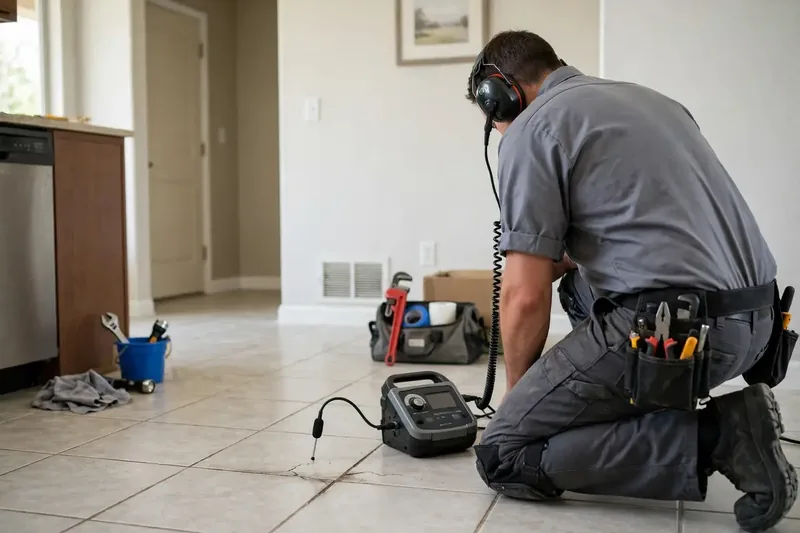
Technician listening for a leak on a tile floor with detection equipment

The 10-Minute Meter Test

You can check for a hidden leak yourself before calling anyone:

A moving meter doesn't prove a slab leak, since a running toilet can do it too, but it tells you it's time to call a plumber with leak detection equipment.

  • Turn off every faucet, appliance, ice maker and the sprinkler system.
  • Find your water meter in the box near the curb and lift the lid.
  • Look at the small leak indicator (often a triangle or star) and write down the reading.
  • Wait 10 to 15 minutes without using any water.
  • If the indicator moved or the reading changed, water is going somewhere.
  • Close the main valve at the house and check again. If the meter stops, the leak is inside the house or under the slab; if it keeps moving, it's between the meter and the house.
Why Slab Leaks Are So Common in Plano

Blackland Prairie clay. Plano sits on expansive clay that swells after heavy spring rain and shrinks and cracks during dry summers. The slab moves with it, a little every season, and that movement stresses the pipes running underneath.

Copper under the slab. Many Plano homes built from the 1980s through the early 2000s have copper supply lines running beneath the foundation. Over time, movement, rubbing against concrete or gravel, and water chemistry can wear pinholes in the copper.

Hot-water lines fail first. Hot lines expand and contract every time the water heater runs, adding stress. That's why a warm spot on the floor is such a common first sign.

Nearly every house is on a slab. Outside a few older pier-and-beam homes near Downtown Plano, almost every house in the city sits on concrete, so almost every house has pipes under it.

Plumber First, Then Drying: The Order That Saves Money

Slab leak damage takes two different jobs:

If you're not sure where the water is, we can map the moisture first. The wet pattern across the floor often points the plumber to the right area and shows exactly which rooms need drying, before anything is torn up.

  • A plumber finds and repairs the leak. Leak detection specialists use acoustic listening equipment, line pressure tests and sometimes thermal imaging to pinpoint the break under the concrete. We don't repair pipes.
  • We dry what the leak soaked. Flooring, pad, baseboards, the bottom of walls and the slab surface itself.
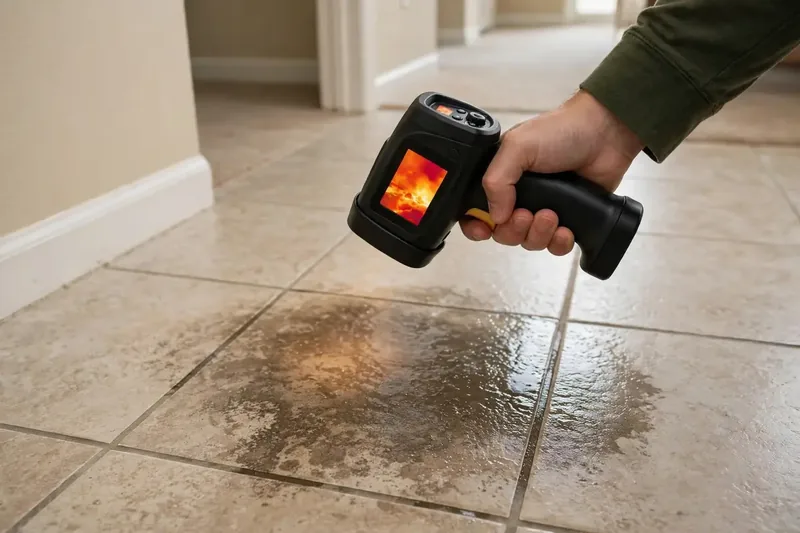
Thermal device over a warm damp spot on a tile floor

How Plumbers Usually Fix a Slab Leak

Your plumber will recommend one of these. Which one affects how much flooring we need to open or protect:

Repair optionWhat it meansEffect on your floors
Spot repair through the slabCutting through the floor and concrete above the leak, fixing the pipe, then patchingFlooring removed in that area; dust and debris to contain
TunnelingDigging under the foundation from outside to reach the pipeFloors inside stay intact, but takes longer
RerouteAbandoning the leaking line and running new pipe through walls or the atticMinimal floor work; small wall openings
RepipeReplacing most or all supply lines in the houseMore wall openings; often recommended after repeated leaks

Where Slab Leak Water Spreads

Water from under the slab moves up and out. It soaks carpet pad from below, gets trapped under tile, vinyl and laminate, and wicks into hardwood and its subfloor. It climbs the bottom of drywall and soaks the baseboards and bottom wall plates. Because it seeps slowly, it can spread across several rooms, hallways and closets before you notice anything. The concrete itself holds a lot of water and gives it back slowly, which is why slab leak drying takes longer than a burst pipe on the same floor.

How We Dry a Home After a Slab Leak

  • Confirm the repair is done or the line is isolated, so no new water is feeding the area.
  • Map every wet room with moisture meters on flooring, walls and the slab, using dry rooms as the reference.
  • Move contents out of affected rooms; for larger jobs, a contents pack-out keeps your belongings safe and out of the way.
  • Remove what traps water: soaked carpet pad, wet baseboards, and flooring that can't be dried in place. Drywall wet only at the bottom gets a short flood cut.
  • Dry the floor system. Hardwood gets drying mats that pull moisture up through the boards; see hardwood floor water damage. Carpet that can be saved is dried in place; see wet carpet drying.
  • Dry walls and slab with dehumidifiers and air movers; see structural drying.
  • Measure daily until the slab, flooring and walls match dry reference readings, then hand you the log.

What Can Be Saved After a Slab Leak

MaterialUsually saved when...Usually replaced when...
CarpetLeak caught early, clean waterLong exposure or musty smell
Carpet padRarelyAlmost always after a slab leak
HardwoodCaught early and dried with matsBoards stay cupped or buckled after drying
TileTile itself almost alwaysCracked tiles, or when removed for the plumber's access
Laminate and vinyl plankRarely, water gets trapped under itUsually removed to dry the slab
BaseboardsSolid wood that's only dampSwollen MDF baseboards
DrywallDamp at the bottom onlyWicked high, crumbling or moldy

Slab Leaks and Insurance in Texas

Slab leak claims often have three parts that policies treat differently: the pipe repair itself, the cost of accessing the pipe (tearing out and replacing flooring and concrete), and the water damage to your home. Many Texas policies handle these separately, and some exclude damage from leaks that went on for a long time. Check your policy before assuming what's covered. We document every wet area and reading from day one, so you have a clear record of what the leak damaged. Our guide to sudden vs. gradual water damage in Texas explains why timing matters.

Slab Leak Drying Across Plano

We also cover North Plano, Allen, Frisco, Murphy and McKinney. See water damage restoration in Plano for everything we handle.

  • Central Plano: 1970s to 1990s homes where original copper under the slab is now decades old.
  • West Plano and Willow Bend: large slabs and long runs of hardwood that a single leak can reach.
  • East Plano and Downtown: older slabs and plumbing, plus a few pier-and-beam homes.
  • Richardson: 1960s and 1970s neighborhoods on the same clay soil.

Slab Leak FAQs

Water Coming Up Through Your Floor?

Call (972) 945-2118. We'll help you check for a slab leak, and once the plumber fixes it, we'll dry your floors and walls the right way.