Water Damage Restoration PlanoPlano, TX(972) 945-2118

Hardwood Floor Water Damage Drying in Plano, TX

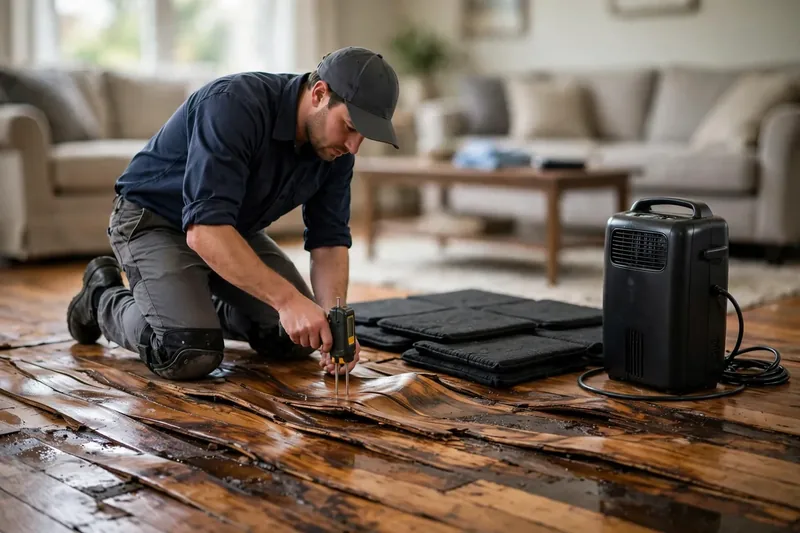
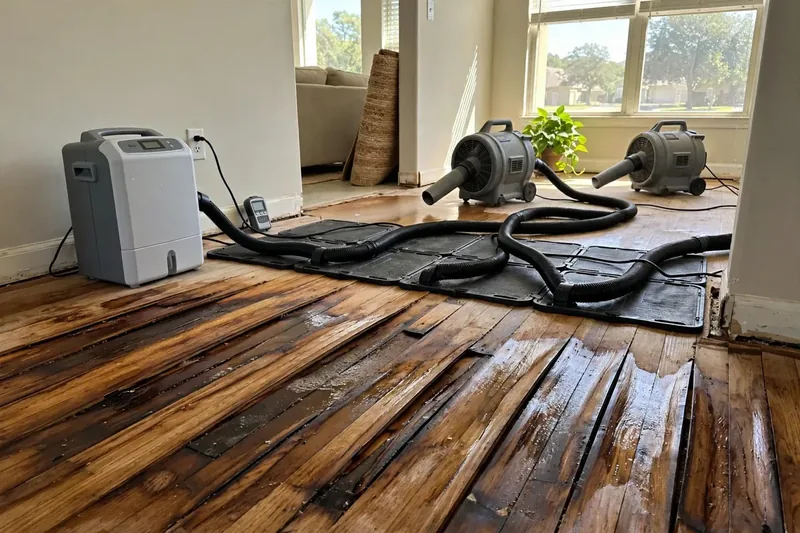
Wood floors don't fail the moment they get wet. They fail when water stays in the boards and subfloor long enough to swell, cup and pull apart. Caught early, many floors can be dried in place with drying mats that pull moisture up through the wood, and boards often flatten back as they dry. We measure, dry and track your Plano hardwood daily, so you replace only what truly can't be saved.

Cupped hardwood floor with drying mats drawing moisture out
  • Local technicians
  • Written scope
  • Moisture monitoring
  • 24/7 emergency response

Water on Your Hardwood? Do This First

  • Stop the source and shut off the water if needed.
  • Wipe up surface water immediately with towels; don't let it sit in the seams.
  • Don't use a steam mop, heater or hair dryer to speed drying. Fast, uneven heat makes cupping and cracking worse.
  • Move rugs and furniture off the wet area so air can reach the floor.
  • Keep the AC running to pull humidity out of the house.
  • Call within hours. The first day matters most for wood floors.
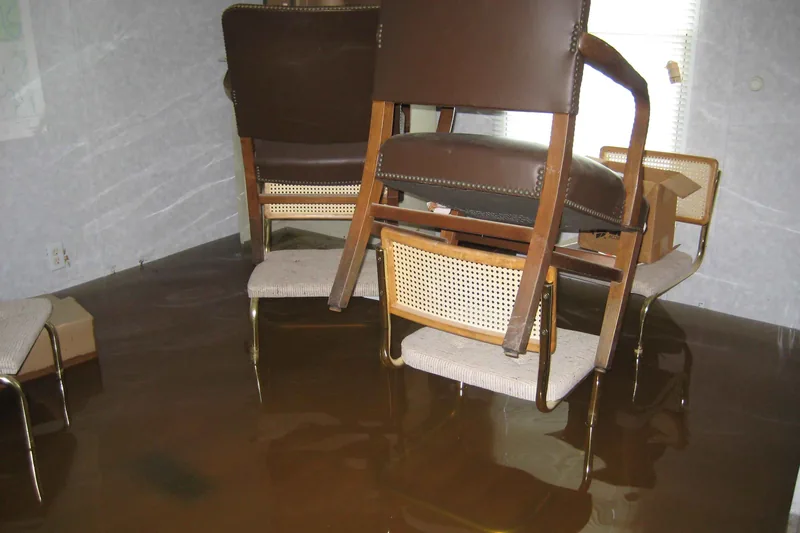
Standing water covering a room floor with chairs stacked to keep them dry

Cupping, Crowning and Buckling: What Your Floor Is Telling You

Wood absorbs water and swells. Where the moisture sits in the board decides the shape the floor takes, and the shape tells us where the water is.

Never sand a cupped floor until readings show it's dry; sanding too early is what turns cupping into permanent crowning.

ConditionWhat it looks likeWhat it means
CuppingBoard edges higher than the centerMore moisture under the board than on top; water came from below or soaked in
CrowningCenter higher than the edgesOften happens when a cupped floor is sanded before it dried
BucklingBoards lifting off the subfloorSevere swelling; often needs replacement
GappingSpaces opening between boardsShrinking as boards dry out, sometimes too fast
Dark stainingBlack or gray marks at seamsLong exposure or a reaction with the finish or wood

Can Water-Damaged Hardwood Be Saved?

Often, yes, when water was clean and drying starts within a day or two. Solid hardwood can absorb a lot of water and give it back when dried properly. Engineered hardwood is less forgiving because its layers can separate. Floors soaked by sewage or storm water, or left wet for days, usually need replacing.

FactorBetter odds of savingLower odds
Type of waterClean supply line or appliance waterSewage or storm water
Time before dryingSame day to 48 hoursSeveral days
Floor typeSolid hardwoodEngineered with thin veneer, laminate
Damage visibleMild cuppingBuckling, delamination, black staining
SubfloorPlywood, dryableSaturated particleboard

Why Plano Hardwood Floors Get Wet From Below

In Plano, hardwood often gets wet from underneath, not from a spill on top. A slab leak under a concrete foundation pushes moisture up into wood glued or nailed over it. In two-story homes, an upstairs laundry or bathroom leak soaks the subfloor below the boards. And in larger West Plano homes, long continuous runs of hardwood mean a leak in one room can reach several.

How We Dry Water-Damaged Hardwood

  • Measure the floor. We take moisture readings across the wet area and in dry rooms with the same flooring, so we know the normal reading for your floor.
  • Remove surface water from the finish and seams.
  • Lay drying mats over the wet boards. Connected to a vacuum system, they pull water up through the wood and from the subfloor beneath.
  • Control the room. Dehumidifiers bring the air's humidity down so the wood gives up moisture evenly; air movers are aimed carefully so the surface doesn't dry faster than the underside. See structural drying.
  • Dry from below if needed. On a second floor, we also dry the ceiling cavity under the floor.
  • Track daily. Readings at the same points every day show when boards and subfloor are back to normal.
  • Wait before refinishing. Once readings match dry areas, we recommend the floor settle for a few weeks before any sanding.
Technician checking cupped hardwood planks with a pin moisture meter beside drying mats

How Long Does Hardwood Take to Dry?

Most hardwood floors take 5 to 10 days to dry, sometimes longer. Wood releases water slowly, and drying too fast causes cracking and gapping. A floor over a concrete slab, or one with a wet subfloor, usually takes longer than a floor that only got wet on top.

SituationTypical drying time
Surface water on finished hardwood, caught same day3 to 5 days
Water in seams and subfloor5 to 10 days
Hardwood over a slab after a slab leak7 to 14 days
Second-floor hardwood after an upstairs leak5 to 10 days, plus ceiling below

After Drying: Repair or Replace?

When the floor reads dry, it's time to judge what's left. Some floors look perfect. Some have slight cupping that settles over the next few weeks. Others need sanding and refinishing to flatten them, and some sections need new boards woven in. We document final readings and photos, so your flooring contractor knows exactly what they're working with.

Hardwood Water Damage Across Plano

Also Frisco, Murphy, Richardson and McKinney. See water damage restoration in Plano for every service.

  • West Plano: wide-plank and custom hardwood in large homes in 75093 and 75024
  • Central Plano: hardwood over slabs in 1980s and 1990s homes, where slab leaks are common
  • Allen: engineered hardwood in newer two-story homes

Hardwood Floor Water Damage FAQs

Save Your Hardwood. Call Today.

The first 24 to 48 hours decide whether your floor is dried or replaced. Call (972) 945-2118.