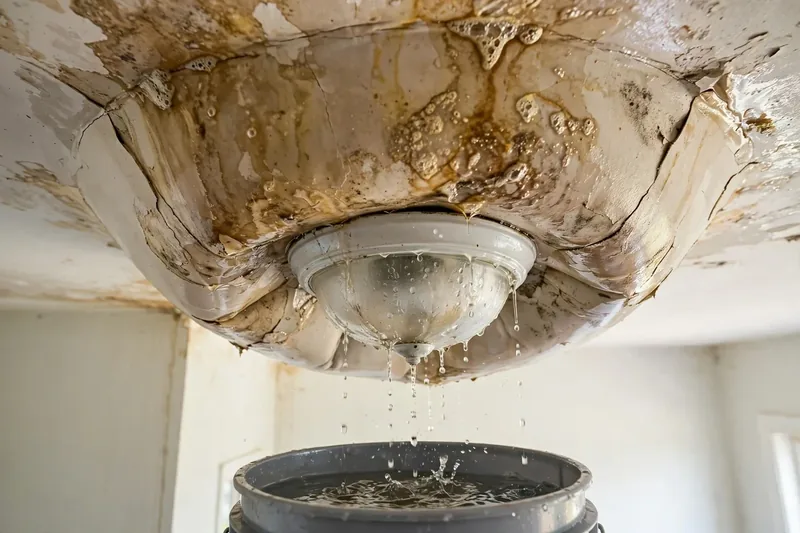
A small, controlled hole in the lowest point of a bulging ceiling can let trapped water drain into a bucket and relieve weight, but only if it's safe to reach. Stand to the side, not underneath, use a screwdriver, and keep power to that area off. If the ceiling is large, heavily bowed or cracking, keep everyone out and call for help instead.
Ceiling Water Damage Cleanup and Repair in Plano, TX
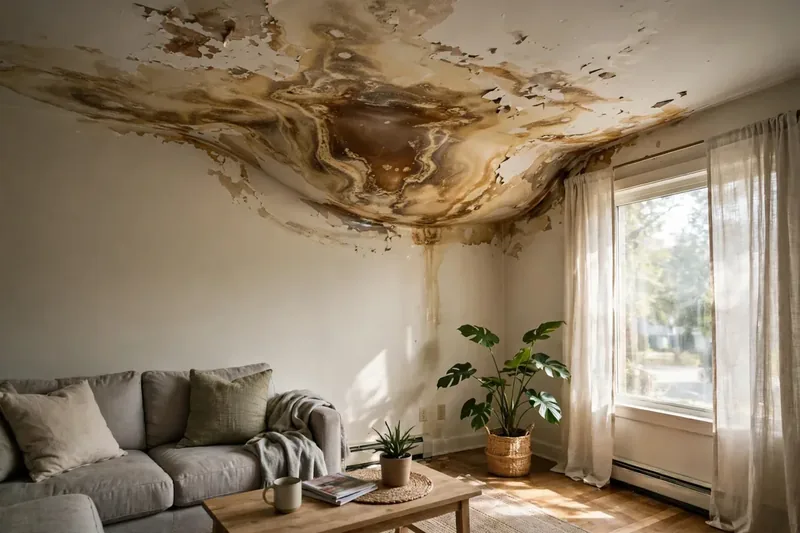
A ceiling stain is the last place leaking water shows up, not the first. By the time you see it, insulation and drywall above it are usually soaked across a wider area. In Plano, the cause is often an attic AC, a water heater, an upstairs bathroom or a hail-damaged roof. We find where the water came from, dry the attic and ceiling, and remove only the sections that can't be saved.
- Local technicians
- Written scope
- Moisture monitoring
- 24/7 emergency response
Water Coming Through the Ceiling? Do This First
Not sure where the water is coming from? See water dripping from the ceiling.
- Stop the water if you can. Turn off the AC at the thermostat, close the cold valve on an attic water heater, or shut off the main if a pipe is leaking.
- Switch off power to any ceiling light or fan that's dripping.
- Keep people out from under a sagging ceiling. Water-heavy drywall can drop without warning.
- Catch the drip with buckets and move furniture, electronics and rugs out of the way.
- Photograph the ceiling and anything wet before it's moved.
- Don't paint over a stain until the area above is confirmed dry; it will come back.
Should You Poke a Hole in a Sagging Ceiling?
What Causes Ceiling Water Damage in Plano?
Most ceiling leaks in Plano homes come from five sources, and each one leaves different clues.
| Source | When it leaks | Clues | Learn more |
|---|---|---|---|
| Attic AC condensate | While the AC runs, mostly summer | Near vents or the air handler; AC may shut off | AC leak |
| Attic water heater | Any time, often constant | Under the tank location; rust; warm water | Attic water heater |
| Roof leak (hail, wind) | During or after rain | Near walls, valleys, chimneys, vents | Roof repair by a roofer |
| Upstairs bathroom or laundry | When fixtures are used | Below a shower, tub, toilet or washer | Plumbing check |
| Frozen or burst pipe | During or after a freeze | Along exterior walls or attic pipe runs | Burst pipe |
Signs of a Ceiling Leak You Might Miss
- A yellow or brown ring that grows or darkens after rain or AC use
- Paint bubbling, peeling or cracking in one spot
- Drywall that feels soft, or a slight bow you notice in certain light
- A musty smell upstairs or in a closet
- Water dripping from a light fixture, smoke detector or vent
- Small dark spots that could be mold near a stain
Why Plano Ceilings Take So Much Water Damage
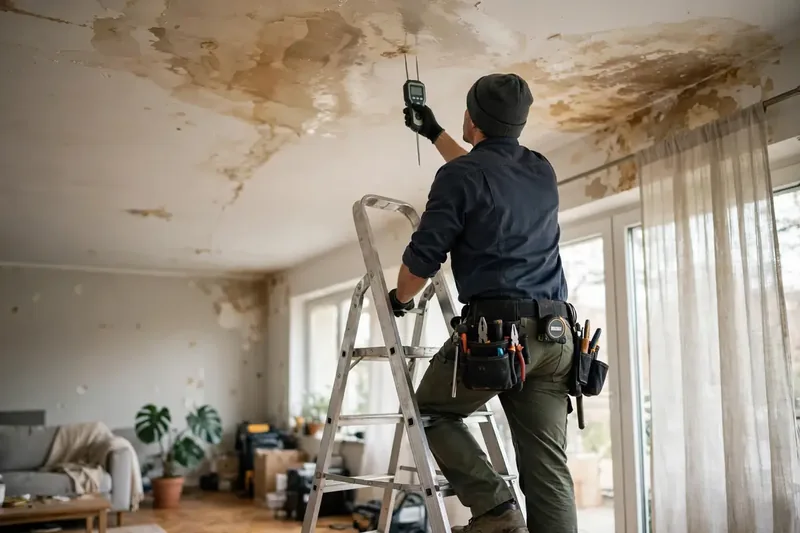
Plano's two-story homes often put the water heater and the AC air handler in the attic, right above bedrooms and living rooms. Collin County's frequent hail damages shingles and flashing, letting rain into attics. And loose blown-in insulation sits directly on ceiling drywall, soaking up water and holding it there, so a leak spreads wide before the first stain appears.
Can a Water-Damaged Ceiling Be Saved?
Often, yes. Drywall that is only damp, still firm and flat, and dried within a day or two usually doesn't need replacing. Drywall that sags, crumbles, has soaked through, or stayed wet for days should come out. Only the damaged section is cut out, not the whole ceiling.
| Condition | Usually | Why |
|---|---|---|
| Small stain, drywall firm, dried quickly | Dry in place, prime and paint | Gypsum handles brief wetting |
| Damp area, slight discoloration | Dry in place, then reassess | Readings decide |
| Sagging, bowing or soft | Cut out and replace that section | Strength is lost, risk of falling |
| Crumbling, tape and joints lifting | Replace the section | Paper and gypsum have broken down |
| Wet for several days, musty smell or dark spots | Replace and check the area above | Mold growth is likely |
| Wet insulation above | Remove the insulation | It keeps the ceiling wet |
How We Fix Ceiling Water Damage
- Confirm the source is stopped and identify which trade must repair it: HVAC, plumber or roofer.
- Map moisture from both sides, in the attic and on the ceiling below, with thermal imaging and meters. See moisture mapping.
- Remove soaked attic insulation around the wet area so the drywall can dry.
- Cut out only failed drywall in clean, square sections that are easy to patch.
- Dry the attic, joists and remaining ceiling with dehumidifiers and air movers. See structural drying.
- Check walls and floors below, because ceiling water often runs down into walls.
- Document and sign off when readings match dry areas, so patching and painting can go ahead.
Fixing a Ceiling Stain After It's Dry
A water stain bleeds through regular paint. Once the drywall reads dry, the stain should be sealed with a stain-blocking primer before the ceiling is repainted, and textured ceilings may need the texture matched. Painting over a stain before the area above is dry is the most common reason stains come back.
What Ceiling Water Damage Repair Costs in Plano
Cost depends mostly on how much ceiling and attic got wet and how long it stayed wet. You get a written estimate before work beyond emergency steps.
See water damage restoration cost in Plano for ranges.
- Size of the wet area in the attic and on the ceiling
- Insulation removal and replacement needed above
- Drywall replacement: none, a patch, or a full section
- Drying time for the attic, ceiling and any walls below
- Texture and paint matching after repair
Ceiling Water Damage Across Plano
Also North Plano, Frisco, Murphy, Richardson and McKinney. See water damage restoration in Plano for every service.
- West Plano: large two-story homes with multiple attic systems
- Central Plano: attic water heaters and older roofs
- Allen: recent hail seasons and roof leaks
Ceiling Water Damage FAQs
A small dry stain isn't dangerous by itself. A sagging, soft or dripping ceiling can fall, and wet areas near lights or fans are an electrical risk.
Usually 2 to 5 days with dehumidifiers and air movers, once wet insulation above is removed.
Only after the area is confirmed dry and sealed with a stain-blocking primer. Otherwise the stain bleeds back.
It can, especially if drywall and insulation stay wet for more than a day or two in warm, humid conditions. Drying quickly is the best prevention.
The most likely causes are the attic AC condensate line, an attic water heater, or plumbing from an upstairs bathroom.
Rarely. Only the damaged section is cut out and patched.
A roofer repairs the roof. We handle the water damage inside: attic, insulation, ceiling and anything below.
Water Coming Through Your Ceiling?
Call (972) 945-2118. We'll find out how far the water spread and dry it before the damage grows.