Water Damage Restoration PlanoPlano, TX(972) 945-2118

Structural Drying and Dehumidification in Plano, TX

Once standing water is gone, the real work begins. Water stays inside drywall, framing, subfloor and concrete, and it doesn't leave on its own fast enough to prevent swelling, odor or mold. Structural drying uses dehumidifiers, air movers and daily moisture readings to pull that water out and dry your Plano home in place, so less has to be torn out and rebuilt.

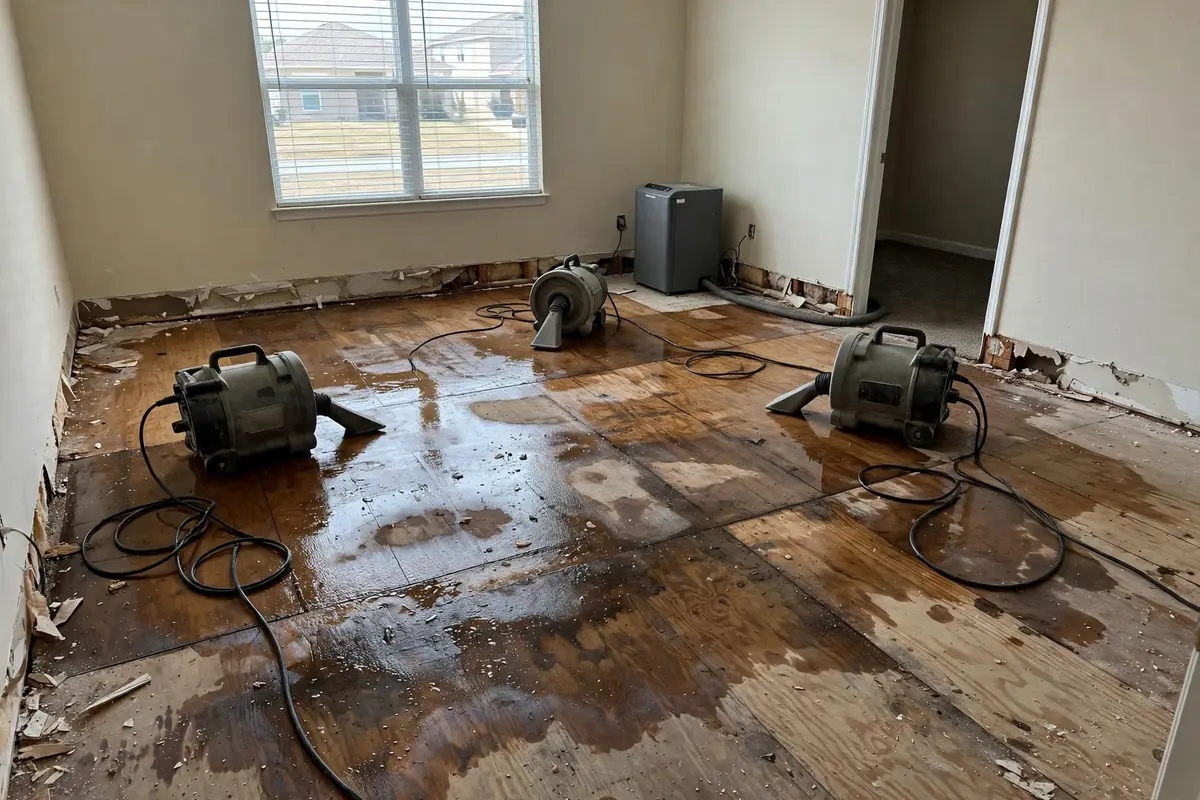
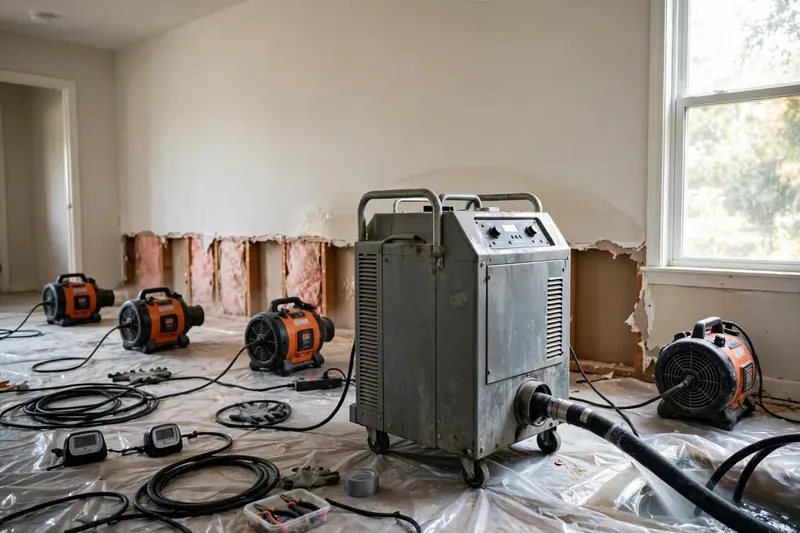
Dehumidifier and air movers drying a room
  • Local technicians
  • Written scope
  • Moisture monitoring
  • 24/7 emergency response

What Is Structural Drying?

Structural drying is the controlled removal of moisture from a building's materials (drywall, wood framing, subfloor, flooring and concrete) after water damage. It works by speeding up evaporation with moving air and removing that moisture from the air with dehumidifiers, while measuring progress every day until materials reach their normal dry levels.

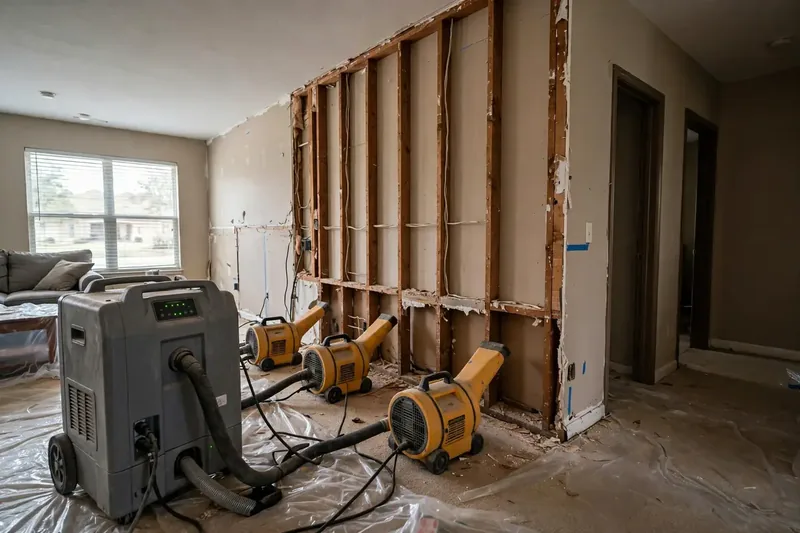
Dehumidifier and air movers drying a stripped living-room wall

How Structural Drying Works

Drying depends on three things working together. Get one wrong and drying stalls; get all three right and materials dry days faster.

In a humid North Texas summer, outside air is often wetter than the air we're trying to create inside. That's why doors and windows usually stay closed during drying, and the dehumidifiers do the work.

FactorWhat it doesHow we control it
AirflowMoves moist air away from wet surfaces so more water can evaporateAir movers aimed along walls and floors
DehumidificationPulls evaporated water out of the air so it doesn't soak back inLow-grain refrigerant (LGR) or desiccant dehumidifiers
TemperatureWarmer materials release water fasterManaging the home's HVAC and, when needed, controlled heat

Equipment Used in Structural Drying

EquipmentPurpose
LGR dehumidifierRemoves large amounts of water from the air, even as the air gets drier
Desiccant dehumidifierDries air in cool spaces or for hard-to-dry materials
Air moversHigh-velocity airflow across wet surfaces
Wall cavity drying systemPushes dry air into walls and cabinets through small holes
Hardwood drying matsPull moisture up and out of wood floors and subfloor
Moisture metersMeasure water content in drywall, wood and concrete
Thermo-hygrometerMeasures temperature and humidity in each room
Thermal cameraShows where wet areas are hiding

Water Damage Classes: How Much Drying Is Needed

The restoration industry groups jobs by how much water was absorbed, called the class of water damage. The class decides how much equipment is needed and how long drying takes.

ClassWhat got wetDrying effort
Class 1Part of a room; little water absorbedLight
Class 2A whole room; carpet, pad and walls up to about 24 inchesModerate
Class 3Ceilings, walls, insulation and subfloor, often from aboveHeavy
Class 4Hardwood, plaster, concrete or stone, which hold water tightlySpecialty drying, longer timelines
Air movers aimed at a wet subfloor with baseboards removed

Drying in Place vs. Tearing Out

Good structural drying saves materials that would otherwise be thrown away. Drying in place works best when water was clean and drying started quickly.

For water that reached walls from an attic leak or burst pipe, see ceiling water damage and burst pipe cleanup.

  • Walls: drywall wet only near the bottom can often be dried with cavity drying or a short flood cut instead of full replacement
  • Cabinets: dry air can be pushed into toe-kicks and bases without removing cabinets or countertops
  • Hardwood: drying mats can flatten mildly cupped floors
  • Ceilings: firm, damp drywall dries in place; sagging sections come down
  • Insulation: wet insulation inside walls or in the attic usually has to be removed

How We Know When Your Home Is Dry

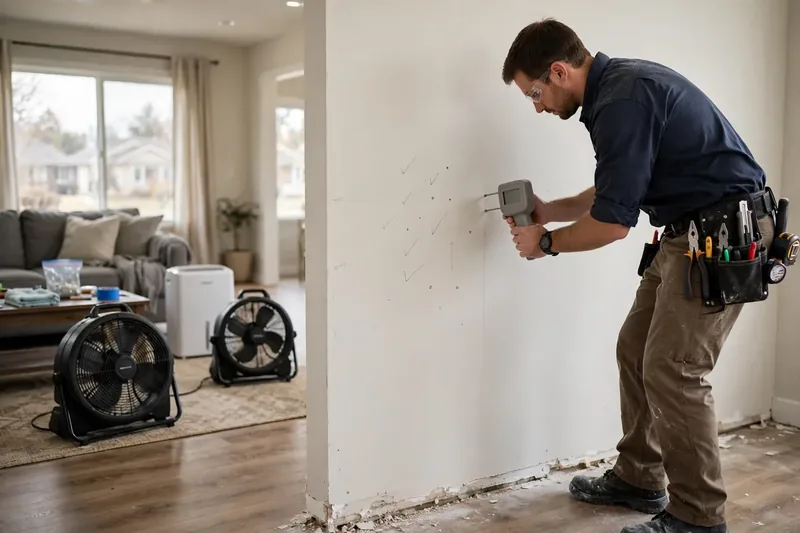
A home is dry when its materials read the same as the unaffected parts of the same house, not when the surface feels dry or a set number of days has passed. We take reference readings in dry rooms on day one and compare every wet area to them daily.

Our daily monitoring visit includes:

The drying starts with a full moisture map, so the end point is measured against a known starting point.

  • Moisture readings at the same marked points in every wet area
  • Temperature and humidity in each drying room and outside
  • Adjusting, adding or removing equipment based on progress
  • Photos and a written log you keep
Technician checking a wall with a pin moisture meter beside marked test spots and drying equipment

How Long Does Structural Drying Take?

Most clean-water jobs in Plano dry in 3 to 5 days. Hardwood, concrete, plaster and jobs that started late take longer. Here are typical ranges:

See our pages on slab leak water damage and hardwood floor water damage for those specific cases.

SituationTypical drying time
Clean water, carpet and drywall, caught the same day3 to 4 days
Ceiling and attic after an AC or water heater leak2 to 5 days
Hardwood floors5 to 10 days
Slab leak with flooring and concrete involved4 to 7 days or more
Water left for several days before drying startedOften longer, with more removal

Renting a Dehumidifier vs. Professional Structural Drying

A rented dehumidifier and box fans can help with a small spill on a hard floor. For anything that reached carpet pad, drywall, cabinets or a subfloor, the problem isn't the equipment alone: it's knowing where the water is, how much there is, and when it's actually gone.

DIY rentalProfessional structural drying
EquipmentOne household or rental dehumidifier, box fansSized LGR dehumidifiers and air movers for the room volume
Hidden waterNot measuredMapped with meters and thermal imaging
Walls and cabinetsSurface onlyCavity drying systems
Knowing when it's dryGuessingDaily readings vs. dry references
DocumentationNoneFull log for insurance and contractors

Why Drying Matters More in Plano

North Texas summers are long and humid, which slows natural drying and favors mold growth. Homes are built on slabs over expansive clay, so slab leaks soak flooring from below. Two-story homes put water heaters and air handlers in the attic, so leaks reach ceilings and walls. And hard freezes like Winter Storm Uri in 2021 can flood many homes at once, when every day of delay counts.

Structural Drying Across Plano

We dry homes and businesses in every Plano ZIP code (75023, 75024, 75025, 75074, 75075, 75093) and nearby:

Also Allen, Frisco, McKinney, Murphy and Wylie. See water damage restoration in Plano for every service.

Structural Drying FAQs

Dry It Right the First Time

Call (972) 945-2118 and we'll measure, dry and document your home until the readings prove it's dry.