Most homes in Plano and across North Texas sit on concrete slabs, with water lines running under or through the concrete. Your hot-water line carries water at well above room temperature from the water heater to faucets and fixtures. When that line develops a pinhole leak, hot water keeps flowing out under the slab, and the water heater keeps heating new water to replace it. The concrete above the leak warms up, and the warm area often spreads slowly over days or weeks.
Warm Spot on the Floor? Here's How to Tell If It's a Slab Leak
- Local technicians
- Written scope
- Moisture monitoring
- 24/7 emergency response
A warm spot on the floor of a slab home is one of the most common signs of a slab leak. When a hot-water line under the concrete springs a leak, the escaping water warms the slab above it, and you feel it through tile, wood or carpet. It isn't the only possible cause, though. Here's how to check, what else it could be, and what to do if it turns out to be a leak.
Why a Leak Makes the Floor Warm
Other Things That Can Cause a Warm Floor
| Cause | How it differs from a slab leak |
|---|---|
| Sunlight through a window | Warm only in the afternoon; follows the sun's path |
| Heating or AC ducts in or under the slab | Some older homes have ducts in the slab; warm only when the heat runs |
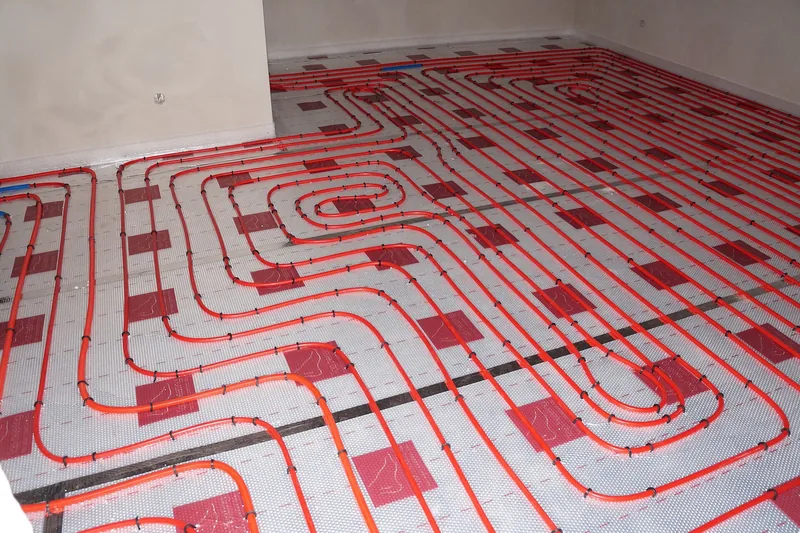
| Radiant floor heating | Intentional; usually in a bathroom, on a thermostat |
| Appliance nearby | Refrigerator, freezer or dryer exhaust warming a small area |
| Water heater on the other side of a wall | Constant mild warmth next to the closet |
| Slab leak on a hot-water line | Warm all day and night, may grow, often with other signs below |
Other Signs That Point to a Slab Leak
A warm spot plus one or more of these makes a slab leak much more likely:
- Your water bill jumped with no change in how you use water
- Your gas or electric bill rose because the water heater runs more
- You hear water running with every faucet and appliance off
- Hot water runs out faster than it used to
- Carpet or pad feels damp near the warm area
- Hardwood is cupping or tile is cracking or sounding hollow
- A musty smell near the floor or baseboards
- New cracks in walls or floors, or doors starting to stick
How to Check at Home
These tests point you in the right direction. A plumber with leak detection equipment confirms it.
- Walk barefoot across the area and note how big the warm spot is. Mark the edges with painter's tape.
- Use an infrared thermometer if you have one to compare the warm spot with the floor a few feet away.
- Check it at different times of day. Sunlight and ducts come and go; a leak stays warm.
- Do the meter test. Turn off every faucet and appliance, look at the water meter's leak indicator, and wait 10 to 15 minutes. If it moves, water is going somewhere.
- Close the cold-water valve at the water heater for an hour, with no hot water use. If the meter stops moving and the warm spot starts to cool, the leak is likely on the hot side.

Why Plano Homes Get Slab Leaks
Plano sits on Blackland Prairie clay that swells after spring rains and shrinks hard in dry summers. Slab foundations move with it, a little every season, and that movement stresses the pipes beneath them. Many homes built from the 1980s through the early 2000s have copper supply lines under the slab, and after decades of movement and contact with concrete and soil, pinholes develop. Hot-water lines tend to fail first, because they also expand and contract every time the water heater runs. That's why warm spots are such a familiar first sign in Central Plano and other established neighborhoods.
Found a Warm Spot? Do This Next
- Close the cold-water valve on the water heater to stop feeding a hot-side leak, if hot water use can wait.
- Call a leak detection plumber. They use acoustic equipment, pressure tests and sometimes thermal imaging to pinpoint the leak under the concrete.
- Photograph the area, the meter test and any damaged flooring.
- Lift a rug or move furniture off the warm area so it doesn't trap moisture.
- Don't wait for visible water. By the time water shows at the surface, it has usually spread under flooring across a wider area.
How Slab Leaks Are Repaired
Your plumber will recommend one. The choice affects how much flooring needs to be opened or protected.
| Repair | What it means |
|---|---|
| Spot repair | Cutting through flooring and concrete above the leak, fixing the pipe, and patching |
| Reroute | Abandoning the leaking line and running new pipe through walls or the attic |
| Tunneling | Reaching the pipe from outside, under the foundation |
| Repipe | Replacing most of the supply lines, often after repeat leaks |
The Water Damage Under Your Floor
Fixing the pipe stops new water. It doesn't dry what's already wet. Water from a slab leak soaks up into carpet pad, gets trapped under tile and vinyl, and wicks into hardwood, baseboards and the bottom of walls. Concrete also holds water and releases it slowly. Left alone, that moisture leads to cupped floors, odor and mold.
After the repair, a professional moisture map shows exactly which rooms are wet, and slab leak water damage drying handles the floor system and walls. For specific floors, see hardwood floor drying and wet carpet drying.
Does Insurance Cover a Slab Leak?
It depends on your policy. Slab leak claims often have three parts treated differently: the pipe repair, the cost of tearing out and replacing flooring to reach the pipe, and the water damage itself. Some policies exclude damage from leaks that continued over time. See sudden vs. gradual water damage in Texas.
Frequently Asked Questions
No. Sunlight, ducts in the slab, radiant heat or a nearby appliance can cause warm areas. A leak usually stays warm all day and comes with other signs like a higher water bill.
Do the meter test, then call a plumber with leak detection equipment to pinpoint it.
It should be addressed within days, not weeks. The longer it runs, the more flooring and wall damage it causes.
Minimizing use, or closing the water heater's cold-water valve until the repair, limits the damage.
Not always. Carpet and hardwood can often be dried if the leak is caught early; carpet pad usually needs replacing.
Warm Spot in Your Plano Home?
Once your plumber finds the leak, call (972) 945-2118. We'll map the moisture and dry your floors and walls.