- Don't walk through flood water in the house if power is on. Shut off electricity at the main breaker only if you can reach it while standing on a dry surface.
- Keep children and pets out of the water and the rooms it reached.
- Wear boots and gloves if you have to enter, and wash thoroughly after.
- Don't drink tap water if the city issues a boil notice.
- Photograph everything before cleanup, including the water line on walls.
- Don't use household fans on contaminated water; they spread particles.
- Call your insurance agent to ask whether you have flood coverage.
Flood Damage Restoration in Plano, TX
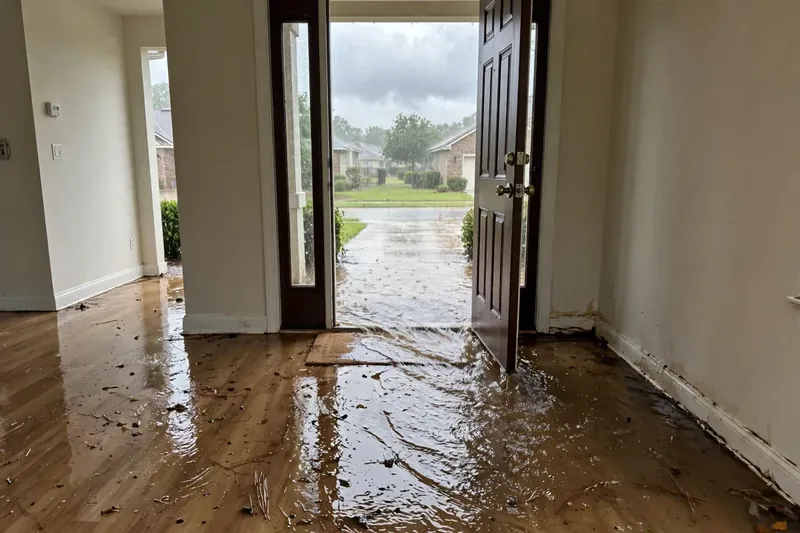
When heavy rain pushes water under doors, through slab edges or up through floor drains, it isn't clean water. Flood water carries soil, street runoff and sewage, and it soaks into everything it touches. North Texas storms can drop several inches in an hour. We remove contaminated materials, clean and disinfect what stays, and dry your Plano home's structure so it's safe again, not just dry.
- Local technicians
- Written scope
- Moisture monitoring
- 24/7 emergency response
Is Flood Water Dangerous?
Yes. Water that came in from outside is treated as Category 3, the most contaminated class, because it can carry bacteria, fertilizers, oil, sewage overflow and debris. Porous materials it soaks, like carpet, pad and the lower part of drywall, usually need to be removed, and every hard surface it touched needs cleaning and disinfecting before drying.
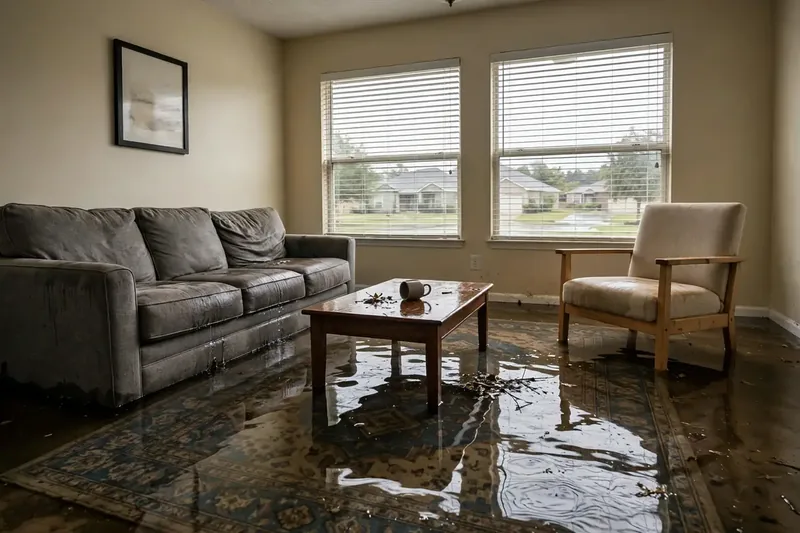
Flood Water in Your Home? Stay Safe First
How Flood Water Gets Into Plano Homes
Plano homes rarely flood from rivers. Most flood damage here comes from intense storms that overwhelm the ground and drainage in a short time.
| How it enters | What's happening | Where you see it |
|---|---|---|
| Under exterior doors | Water pools at the door faster than it drains away | Entry halls, back doors, garage doors |
| Through the slab edge | Saturated soil pushes water along the foundation | Baseboards and carpet along exterior walls |
| Garage flooding | Driveway runoff runs into the garage | Garage floor, laundry rooms off the garage |
| Floor drain backup | Sewer system overloaded during heavy rain | Showers, floor drains, toilets |
| Window wells and low windows | Water collects and seeps in | Walls below windows |
| Creek and drainage overflow | Water rises in low areas near creeks | Homes on greenbelts and low lots |
Plano Storms, Creeks and Flood-Prone Areas
North Texas gets some of the most intense rainfall in the country. In August 2022, a storm dropped close to 10 inches across parts of the region in a few hours, flooding homes and highways across Collin County. Plano is crossed by creeks including Spring Creek, Rowlett Creek, White Rock Creek, Russell Creek and Cottonwood Creek, and homes backing onto greenbelts or in low spots see water first.
The City of Plano publishes floodplain maps showing which properties fall in mapped flood zones. Many homes that flood are outside them, because the problem is rain falling faster than lots and streets can drain.
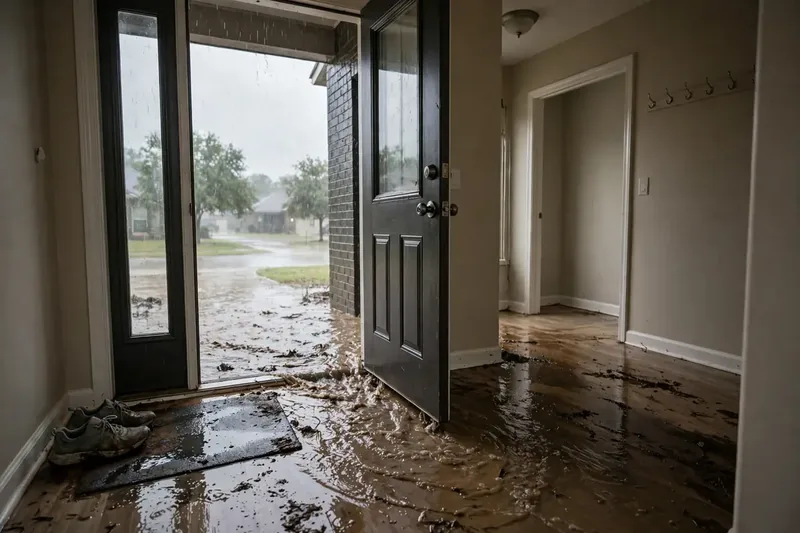
Our Flood Damage Restoration Process
- Make it safe. Confirm power is off to wet areas and the water has stopped rising.
- Extract water with pumps and extractors. See water extraction.
- Remove contaminated porous materials: carpet, pad, baseboards, and drywall and insulation at least 2 feet above the water line.
- Clean and disinfect floors, framing and every hard surface the water touched.
- Pack out contents that need cleaning or protection; see contents pack-out.
- Dry the structure with dehumidifiers and air movers; see structural drying.
- Verify and document with daily moisture readings, photos and a full list of removed materials.
What Must Be Removed After a Flood
| Material | After outside flood water |
|---|---|
| Carpet and pad | Removed |
| Drywall and insulation below the water line | Removed, usually with a cut at least 2 feet above the line |
| Baseboards and door casing (MDF) | Removed |
| Solid wood trim | Sometimes cleaned and saved |
| Hardwood flooring | Often removed; depends on exposure time |
| Tile and sealed concrete | Cleaned and disinfected |
| Kitchen cabinets touched by water | Particleboard removed; solid wood inspected |
| Upholstered furniture and mattresses | Usually discarded |
Does Homeowners Insurance Cover Flood Damage?
Standard homeowners policies usually exclude flood, meaning water from outside rising onto the property. Flood coverage typically comes from a separate flood policy, such as through the National Flood Insurance Program or a private flood insurer. Water that came in through a storm-damaged roof or window may be treated differently from rising water. Check your policies and ask your agent. We document the source and every affected area, either way.
See sudden vs. gradual water damage in Texas for more on how policies treat water.
| Water source | Often covered by | Usually check |
|---|---|---|
| Rising water from outside | Separate flood policy | Flood policy declarations |
| Rain through a storm-damaged roof | Homeowners policy (wind or hail) | Your homeowners policy |
| Sewer or drain backup during rain | Water backup endorsement | Whether you have the endorsement |
How to Reduce Flood Risk at Your Home
- Keep gutters and downspouts clear and extend downspouts away from the foundation
- Make sure soil slopes away from the house on all sides
- Keep storm drains on your street clear of leaves and debris
- Seal gaps under exterior doors, especially low back doors and garage entries
- Consider a French drain if water pools along the foundation
- Check the City of Plano floodplain map for your property
Flood Damage Cleanup Across Plano
Also West Plano, Murphy, Wylie and Sachse. See water damage restoration in Plano for every service.
- East Plano: older neighborhoods near Rowlett Creek and Oak Point
- Central Plano: homes along greenbelts and creek corridors
- Richardson: older areas with heavy storm runoff
- Allen: neighborhoods along Cottonwood and Rowlett Creeks
Flood Damage FAQs
Yes. Once it crosses the ground outside, it's considered Category 3 water and needs cleaning and disinfecting, not just drying.
Within 24 to 48 hours. Contaminated water soaks deeper, and mold growth becomes likely after that.
No. Carpet and pad soaked by outside flood water should be removed.
Usually the lower section, typically at least 2 feet above the water line, plus wet insulation inside the wall.
Usually not rising water from outside; that needs a separate flood policy. Rain through a storm-damaged roof may be different.
Removal and cleaning usually take one to two days, and drying another 3 to 7 days depending on materials.
Storm Water in Your Home? Call Now
Flood water keeps soaking in until it's removed. Call (972) 945-2118 and we'll start the cleanup.