Water Damage Restoration PlanoPlano, TX(972) 945-2118

Moisture Mapping Services in Plano, TX

A stain that keeps growing. A musty smell with no source. Baseboards that started to swell. Water you can't see is still doing damage. Moisture mapping finds exactly where it is, how far it spread and how wet each material is, using thermal imaging and moisture meters instead of guesswork or opening walls. You get a room-by-room map of your Plano home or building, so the right fix happens in the right place.

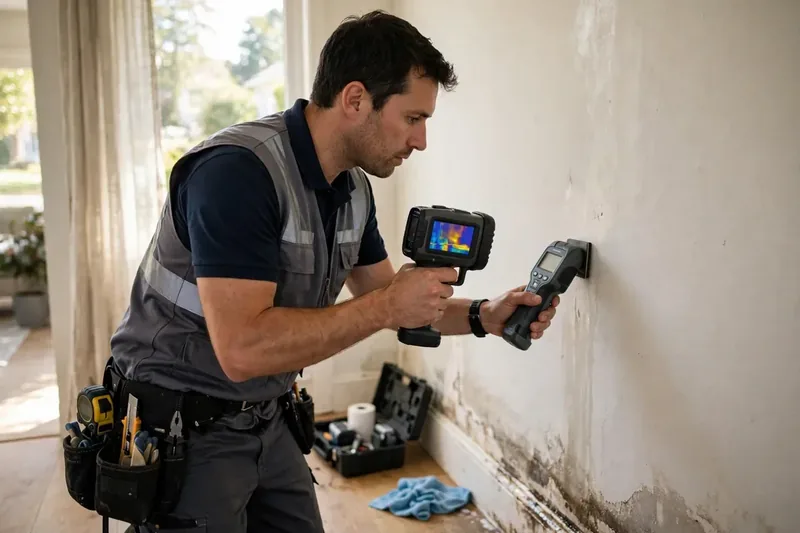
Technician using a thermal camera and moisture meter on a wall
  • Local technicians
  • Written scope
  • Moisture monitoring
  • 24/7 emergency response

What Is Moisture Mapping?

Moisture mapping is a measured survey of a building that shows where water is, how far it has spread, and how wet each material is. A technician scans walls, floors and ceilings with a thermal camera, confirms every suspect area with moisture meters, and records the readings on a floor plan. The result is a map you can act on, not a guess.

It is not a mold test, and it does not involve sampling the air or surfaces. It answers one question precisely: where is the water, and how much is there?

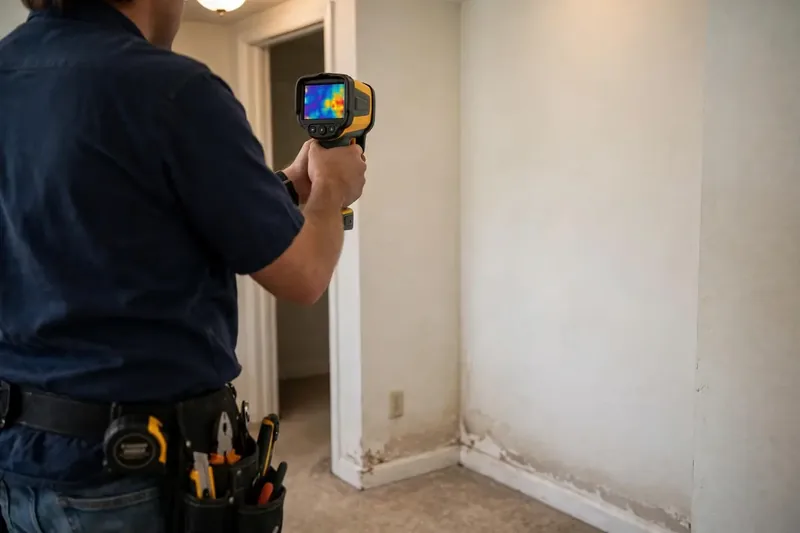
Technician using a thermal camera on a wall to map hidden water

Signs You Need Moisture Mapping in Your Home

Hidden water rarely announces itself. These are the clues Plano homeowners usually notice first:

If two or more of these sound familiar, moisture mapping usually finds the cause in a single visit. Our guide on a musty smell with no visible leak walks through the most common sources.

  • A musty or earthy smell in one room, a closet or under the sink, with nothing visibly wet
  • Baseboards that swell, split or pull away from the wall
  • Paint that bubbles or peels, or drywall that feels soft when pressed
  • A yellow or brown ring on the ceiling, especially below an attic air handler, water heater or upstairs bathroom
  • Hardwood that starts to cup or laminate that lifts at the seams
  • Tile that sounds hollow, cracks, or loses grout near a wall
  • A warm or damp patch on the floor over a slab
  • A water bill that jumped with no change in how you use water
  • A leak was fixed, but you're not sure everything dried, or a previous company pulled equipment early
Why Hidden Water Is So Common in Plano Homes

The way Plano homes are built and the ground they sit on make hidden leaks more likely than in many parts of the country.

Slabs on moving clay. Nearly every house in Plano sits on a concrete slab over Blackland Prairie clay, which swells in wet seasons and shrinks in dry ones. That movement stresses the copper lines under the slab. A pinhole leak there can wet flooring and the bottom of walls for weeks before anything shows. Mapping traces the wet pattern across the floor so your plumber knows where to look. If the readings point to the slab, our slab leak water damage team handles the drying once the line is repaired.

Equipment in the attic. Many two-story homes in Central and West Plano have the air handler, the water heater or both in the attic. A slow drip from a condensate line or a rusting pan soaks insulation first, so the ceiling below may look fine until a large area is already wet. See AC leaking through the ceiling for that specific problem.

Water between floors. In two-story houses, water from an upstairs bathroom or laundry room travels along joists between floors and can surface several feet from the source. Without readings, it's common to repair the wrong spot.

Hail and wind-driven rain. Collin County gets frequent hail. Damaged shingles or flashing let rain in at the roof, and it shows up as a stain only after the insulation is saturated.

Kitchens and appliances. Ice maker lines, dishwasher hoses and sink supply lines leak slowly under cabinets and flooring, often for months.

How We Map Moisture, Step by Step

A moisture map is only as good as the method behind it. Here is how a visit runs:

  • Listen first. We ask what you've noticed, when it started, recent repairs, storms or freezes, and where the water lines and attic equipment are. That narrows where to start.
  • Take dry reference readings. Before scanning the problem area, we measure walls, floors and framing in parts of the house that are definitely dry. Every material reads differently, so your own dry rooms become the standard everything else is compared to.
  • Thermal scan. A thermal camera shows temperature differences across walls, ceilings and floors. Evaporating water cools a surface, so wet areas often appear as cooler patterns. This shows us where to look, fast and without damage.
  • Confirm with meters. Every suspect area gets checked with a pinless meter (reads through the surface without marks) and, where needed, a pin meter for depth. A thermal image alone is never treated as proof of water.
  • Measure the air. A thermo-hygrometer records temperature and relative humidity in affected rooms and in the attic, which tells us how fast materials will dry and whether humidity itself is part of the problem.
  • Trace the edges. We keep taking readings outward until we reach dry material in every direction, so the map shows the full boundary of the wet area, not just the center.
  • Document. Readings are marked on a sketch of each room, with photos and thermal images tied to each spot.
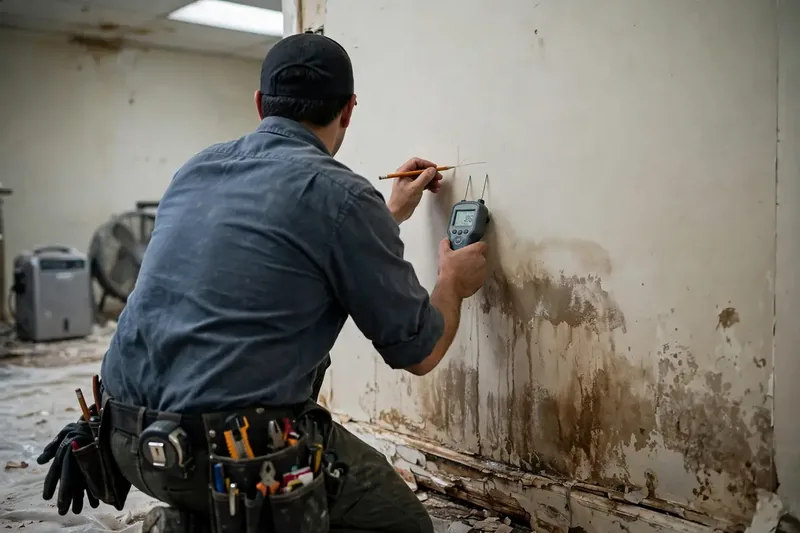
Technician marking wet areas on drywall with a pin meter

Thermal Camera vs. Moisture Meter: Why We Use Both

Many companies rely on one tool. Each has a blind spot, which is why a proper map uses both.

Thermal cameraMoisture meter
What it measuresSurface temperatureMoisture in the material
StrengthScans a whole wall or ceiling in secondsConfirms whether a spot is actually wet, and how wet
Blind spotA cold spot can be an air leak, missing insulation or a duct, not waterOnly reads where you point it, so it can miss areas
Our useTo find where to lookTo prove what's wet and draw the boundary

What Your Moisture Map Report Includes

You get a written report you can hand to a plumber, roofer, contractor, insurance adjuster or buyer:

A sample of how readings appear in the report:

  • Room-by-room sketch with each reading marked where it was taken
  • Dry reference values from unaffected areas of your home
  • Thermal images and matching photos of every wet area
  • Materials affected: drywall, framing, subfloor, hardwood, carpet pad, insulation, cabinets
  • Air readings: temperature and relative humidity per room
  • Likely source based on the wet pattern, and which trade should confirm it
  • Recommended next step: monitor, dry in place, or remove specific materials
LocationMaterialReadingDry referenceStatus
Hall bath, wall behind toilet, 6 in. above floorDrywallHighLowWet
Hall bath, same wall, 30 in. above floorDrywallLowLowDry
Hallway, floor 3 ft. from bath doorHardwoodElevatedLowWet, monitor
Ceiling below, kitchenDrywallLowLowDry

Commercial Moisture Mapping in Plano

In offices, retail spaces, apartments and medical buildings, one leak can reach several suites before anyone reports it. Commercial moisture mapping gives owners and property managers a clear record of where water went and who was affected.

We map after:

Work can be scheduled before opening hours or after close, and the report is set up so each suite or unit has its own page. For drying after the map, see commercial water damage restoration in Plano.

  • Roof leaks in flat-roof buildings along US-75, Plano Parkway and the Dallas North Tollway corridor
  • Fire sprinkler discharges or frozen sprinkler lines
  • Unit-to-unit leaks in apartment and condo buildings, where the source and the damage are in different units
  • Restroom, break room and ice machine leaks in office suites
  • Tenant turnover, when you need proof a space is dry before new flooring or finish work goes in

Moisture Mapping for Plano Home Buyers and Sellers

A standard home inspection notes stains; it usually doesn't measure how far moisture extends behind them. Buyers use a moisture map to check a stain, a patched ceiling or a "previous leak, repaired" note on the seller's disclosure before closing. Sellers use one to show a past leak was fully dried, which can keep a sale from stalling during the option period.

Moisture Mapping vs. Mold Inspection

These are different services, and it's worth knowing which one you need.

We map moisture; we don't test for mold. If we see visible growth or the conditions strongly suggest it, we'll tell you and recommend you contact a TDLR-registered mold assessor. Our guide on moisture mapping vs. mold inspection explains when you need one, the other, or both.

  • Moisture mapping measures water: where it is, how much, and how far it spread.
  • Mold assessment samples and evaluates mold growth. In Texas, mold assessment and remediation are regulated by the Texas Department of Licensing and Regulation (TDLR).

What Happens If We Find Water

The map tells you what comes next:

Because the readings are already recorded, drying starts from a known baseline and ends when the same spots read dry. Nothing is guessed.

  • Source still active: you'll know which trade to call: a plumber for supply or slab lines, an HVAC company for condensate problems, a roofer for roof leaks.
  • Small, recent and clean water: sometimes the material can dry on its own once the source is fixed. We'll tell you if monitoring is enough.
  • Wet materials that need help: we set up structural drying to dry walls, floors and framing in place, and remove only what can't be saved.
  • Hardwood involved: our hardwood floor water damage process uses drying mats to pull moisture out before boards cup permanently.

What Moisture Mapping Costs

We quote the inspection price on the phone before we come out. It depends on:

If drying is needed afterward, the map becomes part of that job's documentation, so you aren't paying for the same measurements twice.

  • The size of the home or building, and how many rooms or units need scanning
  • Whether the attic, crawl space or exterior walls need checking
  • Whether you need a full written report (for a sale, insurance or a commercial file) or a walkthrough of findings
  • After-hours scheduling for commercial properties

Moisture Mapping Across Plano and Nearby Cities

We map homes and commercial buildings in every Plano ZIP code: 75023, 75024, 75025, 75074, 75075 and 75093. The most common calls differ by area:

We also serve Allen, Frisco, McKinney, Murphy and Wylie. For everything we do across the area, start at our Plano water damage restoration.

Moisture Mapping FAQs

Find the Water Before It Finds More of Your Home

Hidden moisture keeps spreading until someone measures it. Call (972) 945-2118, tell us what you're noticing, and we'll quote the visit on the phone.