- Stop the water at the source, or at the main shut-off. See where to find your shut-off valve.
- Turn off power to flooded rooms at the breaker. Never walk through water near live outlets, cords or appliances.
- Don't use a household vacuum. Regular vacuums aren't built for water and can be an electrical hazard.
- Lift furniture onto blocks or foil so legs don't stain carpet or soak up water.
- Move rugs, electronics and papers to a dry room.
- Take photos before anything is moved.
- If the water came from a toilet, sewer or outside, stay out of it. It's Category 3 water.
Water Extraction and Standing Water Removal in Plano, TX
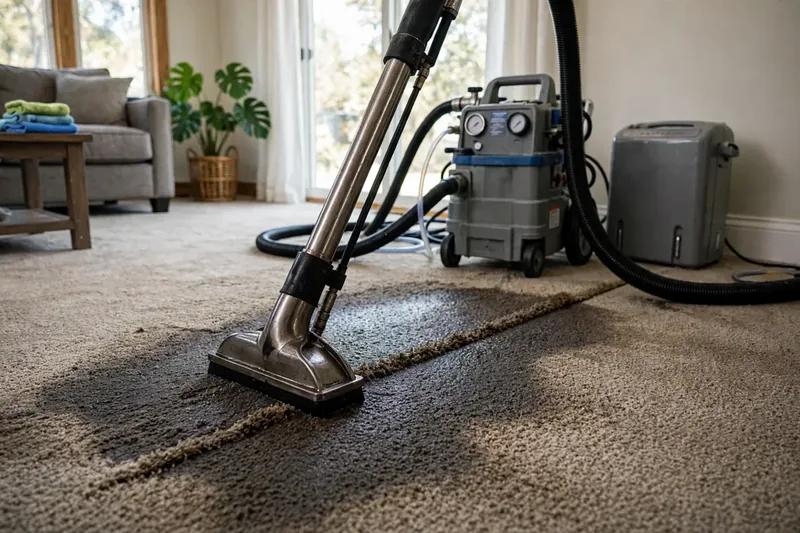
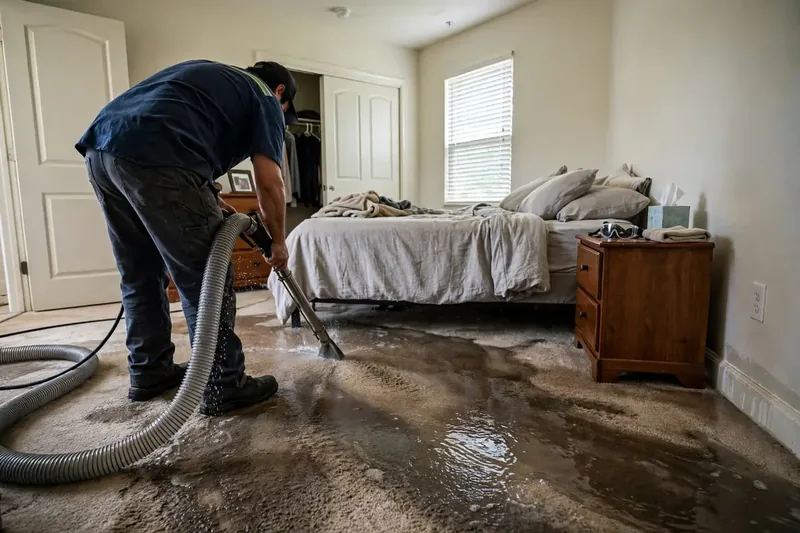
Standing water doesn't sit still. It soaks into carpet pad, wicks up drywall and seeps under flooring every minute it stays. Extraction pulls it out as liquid, which is far faster than waiting for fans and dehumidifiers to evaporate it. We remove water from carpet, pad, hardwood, tile and concrete across Plano homes and businesses, then set up drying so what's left dries in place.
- Local technicians
- Written scope
- Moisture monitoring
- 24/7 emergency response
What Is Water Extraction?
Water extraction is the removal of standing and absorbed water from a building using pumps, vacuums and specialized tools. It's the first physical step of water mitigation. The more water removed as liquid, the less has to evaporate during drying, which shortens drying time and reduces what has to be torn out.
Standing Water in Your Home? Do This First
Equipment We Use to Extract Water
Each surface needs a different tool. Matching the equipment to the material is what separates real extraction from just mopping up.
| Equipment | What it does | Best for |
|---|---|---|
| Truck-mounted extractor | Powerful vacuum mounted in the truck, with hoses run into the home | Large areas of wet carpet and pad |
| Portable extractor | Wheeled unit carried inside | Upstairs rooms, apartments, smaller areas |
| Weighted extraction tool | Presses down on carpet to squeeze water out of the pad underneath | Carpet and pad that may be saved |
| Submersible pump | Removes deep standing water quickly | Garages, flooded rooms, several inches of water |
| Hard-surface wand | Pulls water off and out of seams | Tile, vinyl, concrete |
| Hardwood drying mats | Use suction across the floor surface | Water trapped in and under hardwood |
| Moisture meters and thermal camera | Show where water is hiding | Confirming nothing is missed |
How We Extract Water From Each Surface
Carpet and pad. We extract with wands first, then use weighted tools that press water out of the pad. If the water was clean and caught quickly, the carpet can often be dried in place. Pad usually needs to be replaced if it was soaked through. See wet carpet drying.
Hardwood. Water sits on top and soaks into the seams. Surface water is removed with hard-surface tools, then drying mats pull water from between and under the boards. See hardwood floor water damage.
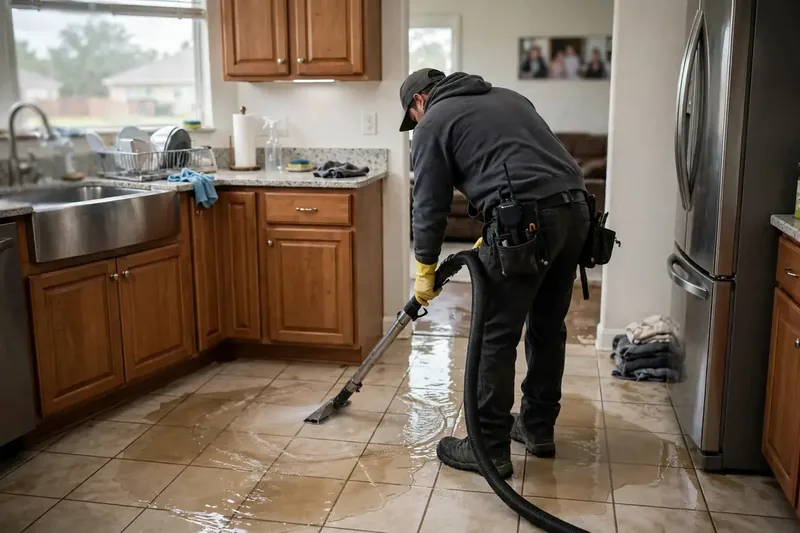
Tile and vinyl. Water comes off the surface easily, but it can slip under vinyl plank and behind baseboards. We check underneath with moisture meters.
Concrete and garage floors. A pump or wet vacuum removes standing water. The slab itself holds water and needs time and dehumidification to release it.
Upstairs rooms. Water on a second floor can travel through the subfloor into the ceiling below. Extraction upstairs comes first, then we check the ceiling under it.
Why a Shop Vac and Towels Aren't Enough
A shop vac removes water you can see on the surface. Most of the water in a flooded room is in places you can't see: carpet pad, the bottom of drywall, under flooring and in the subfloor. Household tools leave that water behind, and it keeps soaking into the house until it's measured and removed.
| Shop vac and towels | Professional extraction | |
|---|---|---|
| Surface water | Yes, slowly | Yes, fast |
| Water in carpet pad | Very little | Weighted tools press it out |
| Water under flooring | No | Drying mats and specialty tools |
| Large volumes | Hours of emptying | Pumps and truck-mounted units |
| Hidden moisture | Unknown | Measured with meters and thermal imaging |
| Dirty water | Spreads contamination | Handled with proper cleaning and PPE |
How Much Faster Is Extraction Than Drying?
Removing water as liquid is the fastest part of the whole job. Evaporating the same water with dehumidifiers and air movers takes days. That's why thorough extraction at the start shortens drying, keeps more materials in place, and lowers the final cost. Skipping straight to fans leaves water trapped in pad and subfloor, where it keeps doing damage.
What Happens After Extraction
Extraction is the first step, not the last. After the standing water is out:
- We map the remaining moisture in walls, floors and ceilings with moisture mapping.
- We remove what can't be saved, like soaked pad or swollen baseboards.
- We set up structural drying: dehumidifiers and air movers sized to the rooms.
- We check readings daily until everything matches dry areas of the home.
Water Extraction in Plano and Nearby Cities
We handle water extraction across all Plano ZIP codes (75023, 75024, 75025, 75074, 75075, 75093) and nearby:
Also Richardson, Frisco, McKinney, Murphy and Wylie. See water damage restoration in Plano for every service.
- West Plano: upstairs laundry and bathroom overflows in large two-story homes
- Central Plano: water heater failures and burst pipes
- East Plano: storm water and sewer backups in older homes
- Allen: storm and roof leaks after hail
Common Causes of Standing Water in Plano Homes
- Burst pipes after freezes; see burst pipe cleanup
- Water heater failures in garages and attics
- Washer hose bursts, especially upstairs
- Toilet overflows and sewer backups; see sewage cleanup
- Storm water coming under doors or through slab edges during heavy rain
- Dishwasher and ice maker line failures
Water Extraction FAQs
As soon as possible, ideally within hours. The longer it sits, the deeper it soaks into pad, drywall and subfloor, and the more has to be removed later.
Often yes, if the water was clean and extraction started quickly. Pad is usually replaced. Carpet soaked by sewage or storm water usually is not saved.
Most rooms take a few hours. Very large areas or deep water take longer. Drying afterward takes several days.
Only if the water was clean and power to the room is off. Stay out of water from toilets, sewers or outside.
Yes. Surface water comes off first, then drying mats pull water from between and under the boards.
We extract water from the floor first, then check and dry the ceiling and the space above it.
It depends on your policy and the cause. Many policies cover it after a sudden loss. We document everything.
Get the Water Out Now
Every hour standing water sits, more of your home soaks it up. Call (972) 945-2118 and we'll start extraction and drying.