Water Damage Restoration PlanoPlano, TX(972) 945-2118

Water Mitigation Services in Plano, TX

Water damage gets more expensive every hour it sits. Mitigation is the work that stops it: finding the source, pulling out the water, removing what can't be saved and getting drying equipment running, usually on the first visit. It's what keeps a wet floor from becoming a new floor, and a damp wall from becoming a mold problem. If water is in your Plano home or business right now, mitigation is the call to make.

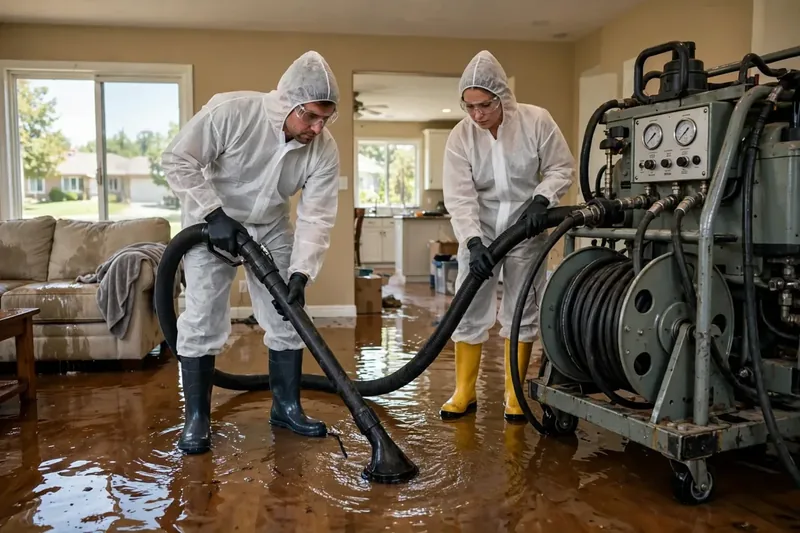
Technicians in protective suits extracting water from a flooded living room
  • Local technicians
  • Written scope
  • Moisture monitoring
  • 24/7 emergency response

What Is Water Mitigation?

Water mitigation is the emergency stage of water damage work. Its goal is to stop damage from getting worse: stop the water, remove it, take out materials that can't be dried, and dry what's left. It doesn't rebuild anything. It protects the structure so rebuilding is smaller, faster and cheaper.

In practice, mitigation usually includes:

  • Confirming the water source is stopped
  • Inspecting and mapping the moisture to find every wet area
  • Water extraction from carpet, pad and hard floors
  • Removing wet materials that can't be saved, like soaked pad or crumbling drywall
  • Cleaning and treating surfaces when the water was dirty
  • Setting up structural drying equipment and monitoring daily
  • Documenting everything for you and your insurance company
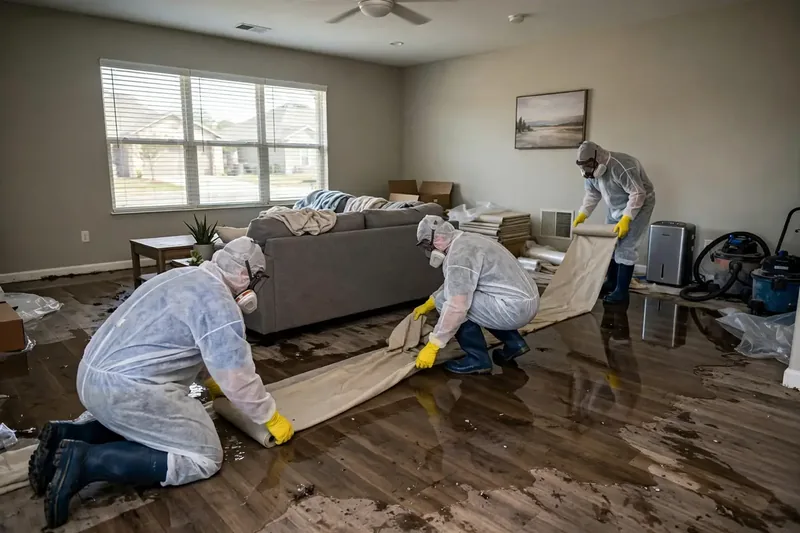
Technicians in protective gear containing water spread in a living room

Water Mitigation vs. Water Restoration: What's the Difference?

Mitigation stops and dries the damage; restoration puts the home back together. Mitigation happens in the first hours and days. Restoration comes after the structure is dry: new drywall, paint, flooring and trim. Many people use the words interchangeably, but they're different jobs and often appear as separate lines on an insurance estimate.

Our focus is mitigation. When the structure reads dry, you get the documentation your contractor needs to rebuild accurately.

Water mitigationWater restoration
GoalStop damage from spreadingRebuild what was removed or damaged
WhenImmediately, day 1 to about day 5After the structure is dry
Typical workExtraction, removal of wet materials, drying, cleaning, documentationDrywall, paint, flooring, cabinets, trim
Who does itWater damage specialistsGeneral contractors and trades
What it preventsSpreading water, swelling, odor, mold growthLeaves the home as it was before the loss

What Happens in the First 48 Hours

The first two days decide most of the final bill. Water spreads sideways through carpet pad and up through drywall, wood swells, and in Texas humidity, conditions for mold growth build quickly. Here's what changes hour by hour:

Starting mitigation in the first hours often means drying in place instead of tearing out.

Time since the leakWhat's happening to your home
First hourWater spreads across floors and into pad; drywall begins wicking it up
Hours 1 to 24Drywall softens, baseboards and particleboard swell, furniture can stain carpet
Hours 24 to 48Wood floors start to cup, odors begin, clean water starts picking up bacteria
After 48 hoursMold growth becomes likely, more material needs removal, water may count as Category 2

Our Water Mitigation Process in Plano

  • Call and triage. We ask about the source, the rooms affected and how long water has been running, and walk you through shutting it off.
  • Inspect and map. Thermal imaging and moisture meters show where the water went, including behind walls and under flooring.
  • Extract. Standing water comes out of carpet, pad and hard floors.
  • Remove what can't be dried. Only the materials that are past saving, like soaked pad, swollen particleboard or saturated drywall, often with a short flood cut instead of full walls.
  • Clean and treat. Required for Category 2 and 3 water, such as appliance discharge, sewage and storm water.
  • Dry and monitor. Dehumidifiers and air movers run until daily readings match dry areas of your home.
  • Document and hand off. Photos, readings, a list of everything removed, and a scope your contractor can rebuild from.
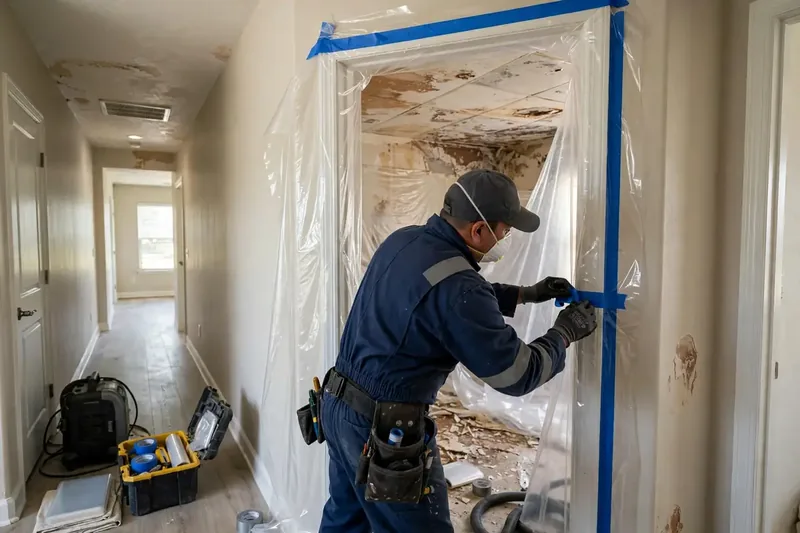
Technician placing containment plastic sheeting in a hallway

Common Water Losses We Mitigate in Plano Homes

Most mitigation calls in Plano come from a handful of sources, and each one spreads water differently. Knowing the source tells us where hidden moisture is likely and what usually needs to come out.

Whatever the source, the same rule applies: the sooner mitigation starts, the more of your home dries in place.

SourceWhere the water usually goesTypical mitigation focus
Burst or frozen pipeWalls, ceilings and floors around the breakFast extraction, wall cavity drying
Slab leakUnder flooring across several roomsFlooring and pad removal, slab drying
AC overflowAttic insulation and ceilings belowInsulation removal, ceiling drying
Attic or garage water heaterAttic, ceilings, garage wallsLarge-volume extraction, ceiling and wall drying
Washer, dishwasher, ice makerKitchen and laundry floors, cabinetsCabinet and subfloor drying
Toilet overflow or sewer backupBathroom, hallway, nearby carpetCategory 3 removal and cleaning
Storm water under doorsEntry floors, baseboards, bottom of wallsCategory 3 cleanup, flood cuts

Water Mitigation and Your Insurance

Most homeowners policies expect you to take reasonable steps to prevent further damage after a loss. That's often called the duty to mitigate. Starting water mitigation quickly is one of the clearest ways to meet it, and the documentation from mitigation helps your claim. Coverage itself is up to your policy and your insurance company.

What we document on every mitigation job:

We don't adjust or negotiate claims. For how Texas policies usually treat different kinds of water damage, read sudden vs. gradual water damage in Texas.

  • Photos of the source, each room and each material removed
  • Moisture readings from day one through the final dry check
  • Equipment used, where, and for how many days
  • An itemized, room-by-room scope of mitigation work

What Does Water Mitigation Cost in Plano?

The cost of mitigation depends mainly on how much area is wet, what kind of water it was, and how long drying takes. A small clean-water leak caught the same day costs far less than a sewage backup or a slab leak that ran for weeks. You get a written estimate before work beyond emergency extraction.

For ranges and real examples, see water damage restoration cost in Plano.

Cost factorWhy it matters
Square footage affectedMore area means more extraction, equipment and labor
Water categoryCategory 2 and 3 water need removal and cleaning that clean water doesn't
MaterialsHardwood, plaster and concrete take longer to dry than carpet and drywall
Time before mitigation startsDelays turn dry-in-place jobs into tear-out jobs
Equipment daysEach day of dehumidifiers and air movers adds cost
ContentsPacking out furniture and belongings adds labor

Water Mitigation Across Plano and Nearby Cities

We provide water mitigation in every Plano ZIP code, 75023, 75024, 75025, 75074, 75075 and 75093, and nearby cities:

See our Plano water damage restoration for every service.

Water Mitigation FAQs

Stop the Damage Now

Every hour water sits, mitigation turns into more removal. Call (972) 945-2118 and we'll get the water out and drying started.