| Area | Why pier-and-beam is common there |
|---|---|
| Downtown Plano, Haggard Park, Old Towne (75074) | Plano's oldest homes, many built before slabs were standard |
| Historic Downtown McKinney | Large historic district with early 1900s homes |
| Older parts of Richardson and Garland | Some early homes and additions |
| Additions and older farmhouses across Collin County | Built on piers before the area developed |
Crawl Space Water Removal and Drying in Plano, TX
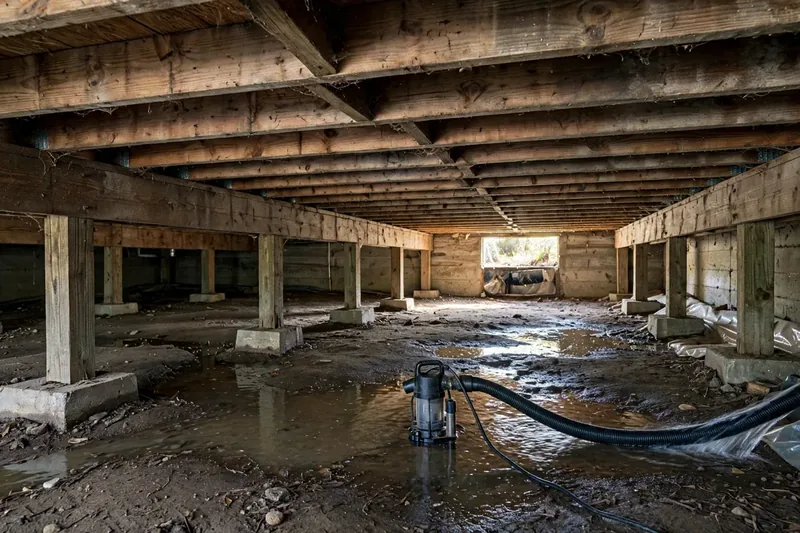
Most of Plano sits on concrete slabs, but many older homes around Downtown Plano and Haggard Park, and in historic parts of nearby cities, sit on piers and beams with a crawl space underneath. When water collects down there, from a plumbing leak or storm runoff, it soaks the joists and subfloor that hold up your floors. We pump out the water, dry the wood structure, and check the floors above before rot or sagging sets in.
- Local technicians
- Written scope
- Moisture monitoring
- 24/7 emergency response
What Is a Pier-and-Beam Home?
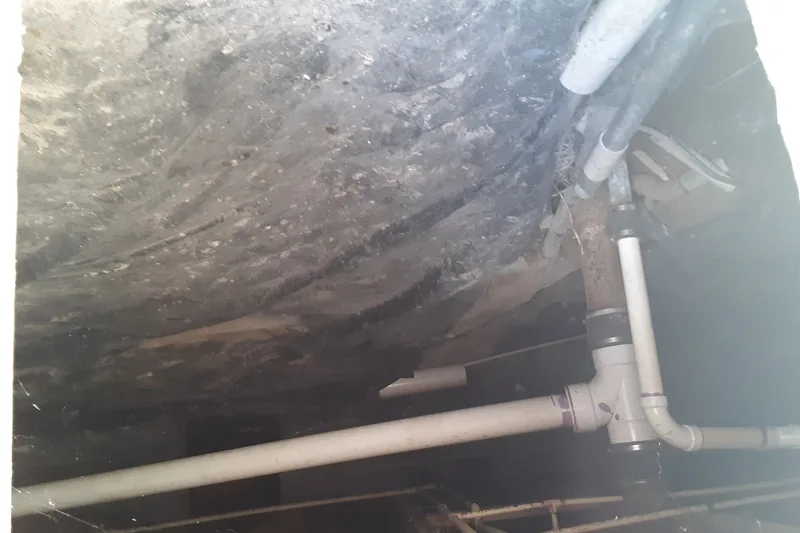
A pier-and-beam home rests on concrete or masonry piers that hold wood beams, with floor joists and a wood subfloor on top. Between the ground and the floor is a crawl space, usually 18 to 24 inches high. Plumbing and sometimes ductwork run through it. It was the standard way to build in North Texas before concrete slabs took over in the mid-1900s, so it's mostly found in older neighborhoods.
Where Plano-Area Crawl Spaces Are Found
What Causes Water in a Crawl Space?
- Plumbing leaks: supply lines and drains run under the house, and a drip can go unnoticed for weeks
- Storm runoff: poor grading or gutters that dump next to the foundation send water under the house
- Burst pipes in a freeze: crawl space pipes are exposed to cold air; see burst pipe cleanup
- Sewer line leaks under the house, which create Category 3 water
- Condensation on ducts or pipes in a humid crawl space
- High soil moisture after heavy rain on Plano's clay soil
Signs of Water Under Your House
- Floors that feel soft, bouncy or uneven
- Hardwood floors that cup or buckle
- A musty or earthy smell inside, worse on humid days
- Higher indoor humidity than normal
- Doors that start to stick or gaps appearing at baseboards
- Insects or pests showing up more than usual
- Visible standing water or mud when you look through a crawl space vent
Why Crawl Space Water Can't Wait
| Risk | What happens |
|---|---|
| Wood rot | Joists, sill plates and beams stay wet and lose strength |
| Sagging floors | Weakened framing lets floors dip or bounce |
| Damaged flooring above | Hardwood cups; vinyl and tile loosen |
| Mold growth | Dark, damp crawl spaces favor growth on wood |
| Pests | Moisture attracts termites and other insects |
| Indoor air quality | Damp air and odors rise into the living space |
How We Remove Water From a Crawl Space
- Find and stop the source with your plumber, or confirm the storm water has stopped flowing in.
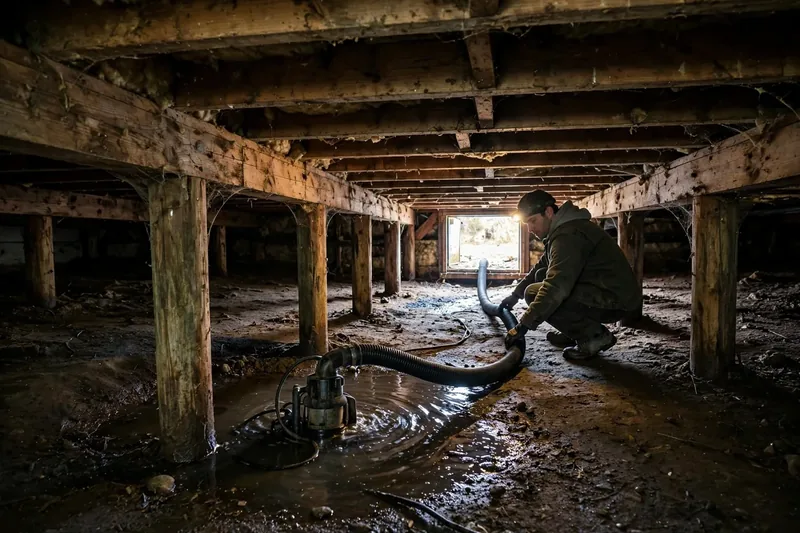
- Pump out standing water with a submersible pump and extractors.
- Remove wet debris and any damaged plastic vapor barrier sheeting so the soil and wood can dry.
- Clean and disinfect if the water came from a sewer line or outside runoff.
- Map the moisture in joists, beams, sill plates and subfloor, and in the floors above; see moisture mapping.
- Dry the crawl space by closing it off and running dehumidifiers and air movers inside it, so the wood framing dries without pulling in humid outdoor air. See structural drying.
- Check the floors above. Hardwood over a wet subfloor may need drying mats from the top too; see hardwood floor water damage.
- Document readings and photos, and flag any framing that a foundation or structural specialist should look at.
Crawl Space vs. Slab: Why the Drying Is Different
| Crawl space home | Slab home | |
|---|---|---|
| Where plumbing runs | Under the house, reachable | Under the concrete |
| How water shows up | Soft floors, smell, humidity | Warm spots, wet carpet, lifted tile |
| What gets wet | Joists, beams, subfloor, soil | Flooring, walls, the slab surface |
| Drying approach | Dry the crawl space as its own space | Dry the room and flooring from above |
| See also | This page | Slab leak water damage |
How to Keep a Crawl Space Dry
- Fix grading so soil slopes away from the house on every side
- Extend downspouts so roof water lands well away from the foundation
- Check under the house after heavy storms and freezes
- Insulate exposed pipes in the crawl space before winter
- Keep a ground vapor barrier in good condition over the soil
- Ask a foundation specialist about drainage or encapsulation if water keeps coming back
Crawl Space Water Removal Near You
Also Garland and older areas of Allen and Wylie. See water damage restoration in Plano for every service.
- East Plano and Downtown: Haggard Park, Old Towne and Douglass, where most of Plano's pier-and-beam homes are
- Richardson: older homes and additions
- McKinney: the historic downtown district
Crawl Space FAQs
Yes. It keeps joists and subfloor wet, which leads to rot, sagging floors, mold and pests if it isn't removed and dried.
We pump out water, remove wet debris and damaged vapor barrier, then close off the crawl space and dry it with dehumidifiers and air movers inside.
Usually 3 to 7 days, depending on how much water there was and how wet the framing got.
They can be, especially hardwood. Drying the crawl space quickly protects them; floors that cup may also need drying from above.
We remove water and dry the structure. For drainage, grading or encapsulation, we recommend a foundation or drainage specialist.
Outside runoff counts as Category 3 water, so the crawl space should be cleaned and disinfected, not just dried.
Water Under Your House? Call Now
Call (972) 945-2118. We'll pump out the crawl space and dry the wood that holds up your floors.