Water Damage Restoration PlanoPlano, TX(972) 945-2118

AC Leaking Water Through the Ceiling in Plano, TX

If water is dripping from a ceiling vent or a stain is spreading under your attic air conditioner, turn the AC off at the thermostat now. That stops new water. The harder part is what already escaped: soaked attic insulation, wet drywall and framing you can't see. We find how far it spread, remove what can't be saved, and dry the rest, so the stain doesn't come back after the HVAC repair.

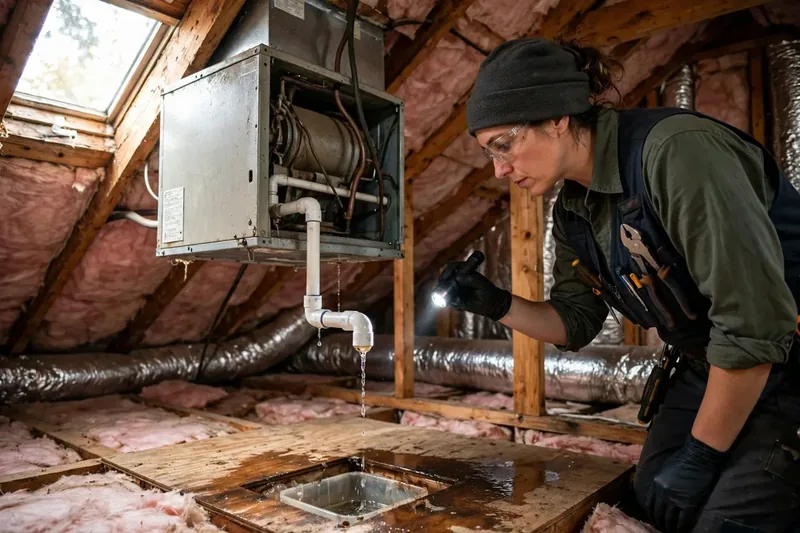
Attic air handler with a leaking condensate line
  • Local technicians
  • Written scope
  • Moisture monitoring
  • 24/7 emergency response

AC Leaking Through the Ceiling? Do This Right Now

Not sure the water is from the AC? Our guide to water dripping from the ceiling helps you tell the AC, the water heater and the roof apart.

  • Turn the AC off at the thermostat. An air conditioner pulls moisture out of the air and drains it as water, often several gallons a day in a humid Texas summer. Off means no new water. Switch the fan to "off" too, not "on."
  • Catch the drip. Put a bucket or bin under the leak and towels around it. If water is coming through a light fixture, switch off that circuit at the breaker.
  • Watch the ceiling. If the drywall is bulging or sagging, keep everyone out from under it. A ceiling holding water can fall without warning.
  • Check the pipe above a window. Many attic units have a backup drain line that ends outside, often above a window or under the eave. Water dripping from it usually means the main drain line is clogged.
  • Check the air filter. A badly clogged filter can make the indoor coil freeze, and when the ice melts it can overflow the pan.
  • Take photos of the ceiling, the vent and anything wet.
  • Call an HVAC technician to clear the drain, and call us to dry what got wet. The AC company fixes the cause; they don't dry insulation, drywall or framing.
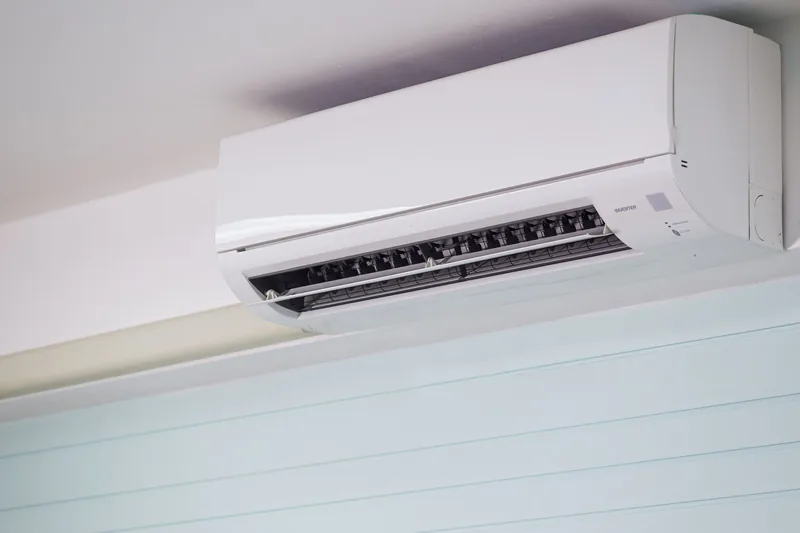
Wall-mounted air conditioner unit on a living-room wall

Why Air Conditioners Leak Into Ceilings

The indoor part of your system, the air handler with its cooling coil, sits in the attic in most two-story Plano homes. As warm air crosses the cold coil, moisture condenses and drips into a drain pan, then flows out a PVC condensate line. When any part of that path fails, the water goes down instead of out.

CauseWhat happensClue
Clogged condensate lineAlgae and sludge build up inside the PVC drain and water backs up into the panWater from the backup line outside, or the AC shut itself off
Rusted or cracked drain panOlder metal pans corrode and leak straight onto the attic floorRust stain on the platform; leak with the drain clear
Failed float switchThe safety switch that should shut the AC off when the pan fills doesn't tripPan full, AC still running
Frozen evaporator coilA dirty filter or low refrigerant ices the coil; melting ice overwhelms the panIce on the copper lines, weak airflow, then a sudden leak
Disconnected or broken drain lineA joint separates or a line gets stepped on in the atticLeak in one spot with a clear pan
Sweating ducts or ventsNot a leak: humid attic air condenses on poorly insulated ductsDrips at a vent on very humid days

Signs Your AC Is Leaking Into the Ceiling

  • A yellow or brown ring on the ceiling near the attic access, a hallway or a ceiling vent
  • Water dripping from a supply vent or a light fixture
  • Paint bubbling or drywall sagging on the top floor ceiling
  • The AC suddenly stops cooling (a float switch may have shut it off)
  • Water dripping from a pipe above a window or under the eave
  • A musty smell upstairs that gets stronger when the AC runs

Why This Happens So Often in Plano Homes

The attic is where the equipment lives. Builders across Plano, especially in two-story homes from the 1980s through the 2000s in Central, North and West Plano, put air handlers in the attic to save living space. Many larger homes have two or three systems up there.

Long, humid summers. From late May into September, North Texas humidity keeps the AC running and producing condensate almost nonstop. A line that drains slowly in April can back up in July.

Aging equipment. A system installed 12 to 15 years ago often still has its original metal pan, and that's when rust-through tends to show up.

Hot attics. Attic temperatures in a Plano summer are extreme, which speeds up algae growth in drain lines and makes it harder to notice a problem until the ceiling shows it.

Blown-in insulation. Most Plano attics have loose-fill insulation over the ceiling. It soaks up water like a sponge and holds it against the drywall, so by the time a stain appears, a much larger area is usually wet.

Where the Water Actually Goes

The stain on your ceiling is the last stop, not the first. A typical path in a Plano attic:

That's why patching and painting the stain rarely works. Unless the insulation and drywall behind it are dried or replaced, the stain returns and the area can start to smell.

  • Water overflows the pan onto the attic platform, usually plywood or OSB decking under the unit.
  • It runs off the edge into the blown-in insulation, which absorbs it and spreads it sideways.
  • Wet insulation sits on the back of the ceiling drywall, soaking it from above.
  • Water follows ceiling joists and gathers at low points, light fixtures and vent boots.
  • If the unit is over a wall, water can run down the top plate into the wall cavity below.

How We Clean Up and Dry After an AC Leak

If the overflow was large, the ceiling below may need more attention; see ceiling water damage.

  • Confirm the source is stopped. We check that the AC is off or the drain has been cleared, and look at the pan and float switch so the leak doesn't restart mid-drying.
  • Map the moisture. We use a thermal camera and moisture meters in the attic and on the ceiling below to find the full wet area, not just the stain. Our moisture mapping process records every reading.
  • Deal with the attic. We pull out soaked insulation in the affected area and dry the platform and joists. Loose insulation that's only damp at the edges can often stay.
  • Decide on the ceiling. Drywall that's only slightly damp and still firm can usually be dried in place. Sagging or crumbling drywall comes down, and we remove only the section that has to go.
  • Dry the structure. Dehumidifiers and air movers are set up in the room below, and in the attic if needed. Walls under the unit get checked and dried too. See structural drying for how that works.
  • Clean and treat. Condensate that has been sitting in a pan and line grows algae and bacteria, so affected surfaces are cleaned and treated before drying finishes.
  • Verify and document. Daily readings until the ceiling, framing and platform read dry, with photos and a log for your records or insurance company.
Technician checking a stained living-room ceiling with a moisture meter while air movers and a dehumidifier dry the room

What Can Be Saved and What Has to Go

MaterialUsually saved when...Usually replaced when...
Ceiling drywallDamp but firm, flat, caught within a day or twoSagging, crumbling, stained through or wet for days
Blown-in insulationOnly lightly damp at the edgesMatted, soaked or smelling
Attic platform (plywood/OSB)Surface wet, no swellingSwollen, delaminating or soft
Ceiling joists and framingAlmost always; wood dries well with airflowRarely, only with long-term decay
Ceiling paint and textureAfter drying, a stain-blocking primer and paintTexture often needs touch-up after drywall repair
Carpet below the leakClean, fast-caught waterLong exposure or musty smell

Is It the AC, the Water Heater or the Roof?

Plano attics often hold all three, and the ceiling stain looks the same. These clues help:

If the leak is under your attic tank rather than the air handler, see attic water heater leaks.

ClueAC condensateAttic water heaterRoof leak
When it leaksWhen the AC runs, mostly in summerAny time, often constantDuring or after rain
Water temperatureCoolCan be warmCold
Where it appearsNear vents, the air handler or attic accessUnder the water heater locationAnywhere, often near walls or valleys
AC behaviorMay shut off (float switch)No changeNo change

Does Insurance Cover AC Leak Water Damage?

It depends on your policy and how the leak happened. Many Texas homeowners policies treat a sudden overflow, like a pan that rusted through or a line that suddenly clogged and spilled, differently from a slow leak that went on for weeks. The AC repair itself is usually treated as maintenance, separate from the water damage it caused.

What helps either way is clear documentation from the start. We provide photos of the pan, line and wet areas, moisture readings from the first visit to the last, and an itemized list of what was removed and dried. Our guide to sudden vs. gradual water damage in Texas explains the difference in plain terms.

How to Keep It From Happening Again

  • Have the condensate line cleared at each spring AC tune-up, before the summer load starts.
  • Pour a cup of white vinegar down the condensate line access (the capped T near the air handler) every month or two in summer to slow algae growth. Ask your HVAC tech to show you where it is.
  • Change the air filter every one to three months so the coil doesn't freeze.
  • Ask about the pan if your system is over 10 years old. A plastic or stainless replacement doesn't rust.
  • Test the float switch during service, or add one if your system doesn't have one.
  • Look at the pipe above your window now and then. Water there means the main line is blocked.
  • Add a water sensor in the attic pan; inexpensive Wi-Fi sensors send an alert to your phone.

AC Leak Cleanup Across Plano

AC overflows are most common in two-story homes where the air handler sits above living space:

We also cover North Plano (75025), Legacy, Frisco, McKinney and Murphy. For everything else water-related, see our Plano water damage restoration.

  • West Plano and Willow Bend: larger homes, often with two or three attic systems.
  • Central Plano: 1980s and 1990s two-story homes, many now on their second or third AC system.
  • Allen: newer two-story homes with attic units over bedrooms and game rooms.

AC Leak FAQs

Water Coming Through the Ceiling From Your AC?

Turn the AC off, put a bucket down, and call (972) 945-2118. We'll tell you what to check while we get moving, and dry the attic and ceiling so the stain doesn't come back.