| Moisture mapping | Mold assessment | |
|---|---|---|
| Question it answers | Where is the water and how wet is each material? | Is there mold growth, and how extensive? |
| Tools | Thermal camera, pin and pinless moisture meters, hygrometer | Visual inspection, moisture checks, air or surface samples sent to a lab |
| Result | A map of wet areas with readings | A report on mold presence and, for larger areas, a remediation protocol |
| When it's used | After leaks, during drying, for hidden leaks, before renovation | When mold is visible, suspected or must be documented |
| Regulated in Texas? | No separate state credential for moisture mapping | Yes: mold assessment is regulated by TDLR |
| Who does it | Water damage and restoration professionals | Mold assessors credentialed by TDLR |
Moisture Mapping vs. Mold Inspection: Which Do You Need?
- Local technicians
- Written scope
- Moisture monitoring
- 24/7 emergency response
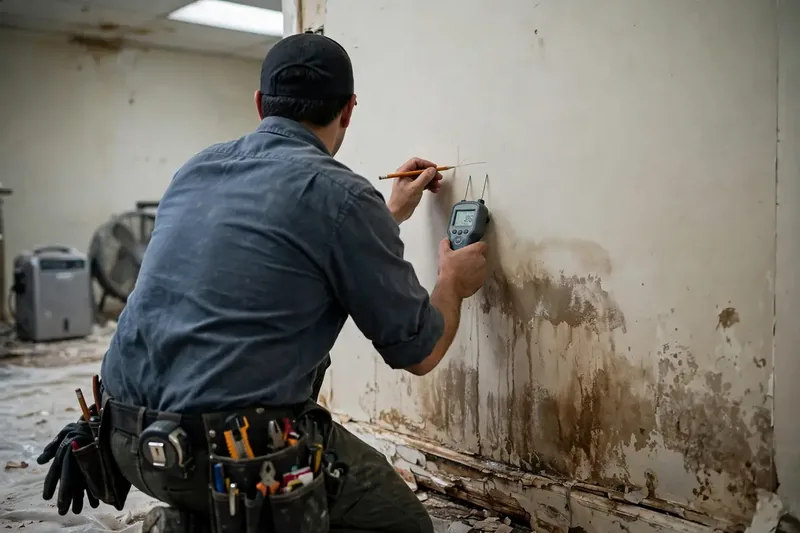
Moisture mapping and mold inspection sound similar, but they answer different questions. Moisture mapping asks: where is the water, and how much? A mold inspection, called a mold assessment in Texas, asks: is mold growing, and how much? Water comes first; mold only grows where there's moisture. Most homeowners need moisture mapping first, and a mold assessment only when there are signs of growth.
The Difference at a Glance
What Moisture Mapping Tells You
It doesn't tell you whether mold is present or what kind. For how mapping works, see what is moisture mapping.
- Exactly which walls, floors and ceilings are wet
- How far the water spread from the source
- How wet each material is compared with dry areas of the same home
- Whether materials can be dried in place or need to come out
- When drying is truly finished
What a Mold Assessment Tells You
A mold assessment usually includes some moisture checking too, because mold follows water. But its focus is the growth, not drying the structure.
- Whether mold growth is present, and where
- Roughly how large the affected area is
- Often, lab results from air or surface samples
- For larger jobs in Texas, a written protocol describing how remediation should be done
- After remediation, whether the area passes a clearance check
Texas Mold Rules in Plain Terms
Texas regulates mold assessment and mold remediation through the Texas Department of Licensing and Regulation (TDLR). In general terms:
These are simplified; check TDLR's current rules or ask an assessor for your situation. The key point for homeowners: if you have a real mold problem, the assessor and the remediator should be independent, and the assessor credentialed by TDLR.
- Mold assessment and remediation are separate roles, and the same company generally can't do both on the same project
- The rules generally apply to mold areas of 25 contiguous square feet or more; smaller areas have exemptions
- Larger projects follow a written protocol from the assessor, and a clearance check afterward
Which One Do You Need?
| Your situation | Start with | Why |
|---|---|---|
| A leak just happened; no visible mold | Moisture mapping | Find and dry the water before mold has a chance |
| Stain or soft drywall, no visible mold | Moisture mapping | Locate the wet area and decide what to dry or remove |
| Musty smell, nothing visible | Moisture mapping first | Odor usually means hidden moisture; finding it often finds the cause |
| Visible mold larger than a small patch | Mold assessment | Texas rules may apply; get a protocol before anyone removes it |
| Small visible spot, like under a sink | Moisture mapping, then decide | Fix and dry the moisture; small areas are often handled simply |
| Buying a home with a past leak on the disclosure | Moisture mapping | Confirms whether the area is still wet |
| Health concerns in the household | Talk to a doctor; consider a mold assessment | Testing can document conditions; medical advice comes from a doctor |
| After a mold remediation job | Clearance by the assessor | Part of the Texas process for larger projects |
Why Water Comes First
Mold needs moisture to grow. Testing for mold without finding and drying the water is like mopping a floor while the faucet is still running. Even after mold is removed, it can come back if the wall, floor or ceiling stays wet. That's why, in most cases, the order is:
- Find and stop the source of water
- Map the moisture
- Dry what can be dried; remove what can't
- If mold growth is significant, have it assessed and remediated by independent, TDLR-credentialed professionals
- Confirm the area is dry and, for remediation jobs, cleared
Signs That Point to Mold, Not Just Moisture
If you see these, avoid disturbing the growth and consider a mold assessment.
In Plano-area homes, the hidden moisture behind mold usually traces back to a few sources: slab leaks under flooring, AC leaks through the ceiling, and slow refrigerator, ice maker and dishwasher leaks under cabinets.
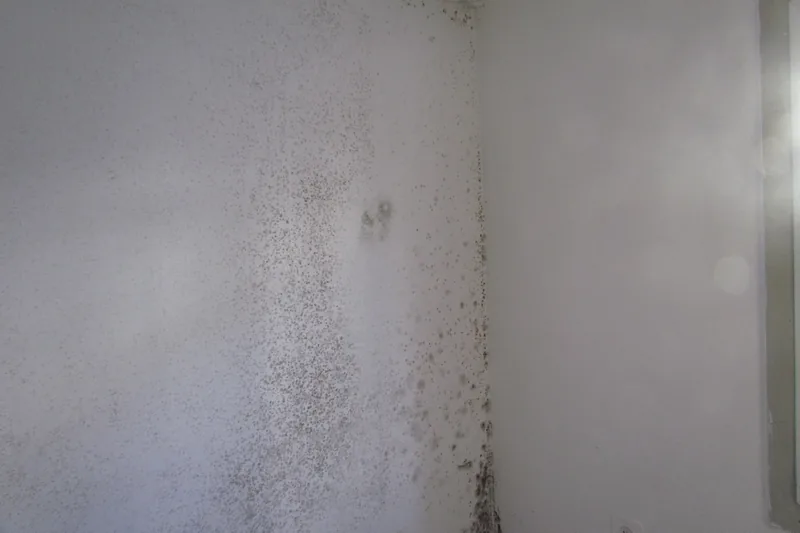
- Fuzzy, spotty or slimy growth on drywall, wood, grout or fabric
- Black, green, white or orange discoloration that spreads
- A strong musty odor that persists after the area seems dry
- Growth on the back of baseboards or drywall when removed
- Areas that stayed wet for days or weeks
Preventing Mold After a Leak
The most effective mold prevention after water damage is fast, measured drying. In North Texas heat and humidity, materials that stay wet for more than a day or two become good places for mold to grow.
See structural drying for how professional drying works.
- Start drying within 24 to 48 hours
- Remove soaked carpet pad and wet insulation that won't dry
- Use dehumidifiers, not just fans
- Measure until readings match dry areas of the home
- Keep indoor humidity reasonable, especially in summer
Frequently Asked Questions
No. Moisture mapping finds water; a mold assessment looks for mold growth.
Not directly. It shows where materials are wet, which is where mold could grow.
Not usually, if the leak was found and dried quickly. Consider one if you see growth, smell persistent mustiness, or the area stayed wet for a long time.
The Texas Department of Licensing and Regulation (TDLR).
Under Texas rules, the assessor and the remediator on the same project generally must be independent of each other.
Small surface spots on hard surfaces can be cleaned. Larger areas, or mold on drywall and wood, should be assessed first.
Find the Water First
Our moisture mapping services find hidden water in Plano homes and buildings. If we see signs of mold, we'll tell you and recommend an independent assessor.