

Water Damage Restoration PlanoPlano, TX(972) 945-2118

Water Dripping From the Ceiling: Is It the AC, the Water Heater or the Roof?

Water dripping from a stained living-room ceiling into a metal bucket
  • Local technicians
  • Written scope
  • Moisture monitoring
  • 24/7 emergency response

Water coming through a ceiling in a North Texas home usually comes from one of five places: the attic AC unit, an attic water heater, the roof, a bathroom or laundry room above, or a pipe in the ceiling. The timing, the weather, the temperature of the water and where the stain sits usually tell you which one. Here's how to narrow it down in a few minutes, and who to call for each.

Technician inspecting water pouring from a ceiling into a bucket

First, Make It Safe

Before playing detective:

  • Put a bucket under the drip and towels around it.
  • Switch off the breaker for any ceiling light, fan or smoke detector that's dripping.
  • Keep people out from under a sagging ceiling. A bulge full of water can drop suddenly.
  • Turn off the AC at the thermostat if there's any chance it's the source. It costs nothing to rule out.
  • If the leak is heavy and steady, shut off the main water while you figure it out. See where to find your shut-off valve.
The Five Usual Suspects

ClueAC condensateAttic water heaterRoofBathroom or laundry abovePipe in the ceiling
When it dripsWhile the AC runs, mostly summerAny time, often constantDuring or after rainWhen a shower, tub, toilet or washer is usedAny time; often after a freeze
Water temperatureCoolCan be warmColdVariesCold or warm
Where the stain isNear a supply vent, the air handler or the attic accessUnder where the tank sitsNear exterior walls, valleys, chimneys, skylightsDirectly below the fixtureAlong a pipe path, often near exterior walls
Other signsAC stopped cooling; water dripping from a pipe outside above a windowRusty water, rust stains, tank over 10 years oldRecent hail or high windsStain grows after showersWater pressure drop, running sound

Quick Questions to Narrow It Down

  • Is it raining, or did it just rain? If yes, the roof or a window is the first suspect. If no, rule out the roof.
  • Is the AC running? Turn it off. If the drip slows and stops over the next hour, it's likely the AC.
  • Is the stain under a bathroom or laundry room? Run the shower or the washer and watch. If the drip starts again, that fixture or its drain is the source.
  • Do you have a water heater in the attic? If the stain is under it, or the water feels warm, check the tank and pan.
  • Did it just freeze? A pipe in the attic or ceiling may have cracked. Shut off the main.
  • Is the water meter moving with everything off? A supply line is leaking somewhere. See our guide to a warm spot on the floor for the meter test.

How to Look in the Attic Safely

If you're comfortable going into the attic:

In summer, Plano attics are dangerously hot by midday. Go early in the morning or leave it to a professional.

  • Use a flashlight and step only on joists or a walkway, never between them
  • Look at the AC air handler for a full pan, water in the pan under it, or a float switch that has tripped
  • Check the water heater pan for water or rust
  • Look at the underside of the roof for wet decking or daylight
  • Feel the insulation near the stain area; wet insulation is heavy and matted
  • Take photos of anything you find

Who to Call for Each Source

Most ceiling leaks need two kinds of help: someone to fix the source, and someone to dry what the water already soaked.

SourceWho fixes the sourceWho dries the damageLearn more
AC condensate overflowHVAC technicianWater damage companyAC leaking through the ceiling
Attic water heaterPlumberWater damage companyAttic water heater leaks
Roof leakRooferWater damage companyCeiling water damage
Bathroom or laundry abovePlumberWater damage companyUpstairs laundry leaks
Burst or frozen pipePlumberWater damage companyBurst pipe cleanup

Why You Shouldn't Just Paint Over the Stain

The stain shows where water finally broke through, not where it all went. Above it, insulation soaks up water and holds it against the drywall, and water spreads along the joists. Painting over a stain before the area above is dry leads to the stain coming back, sagging drywall later, and musty smells that are hard to trace. Once the source is fixed, the ceiling and attic should be checked with moisture meters, and soaked insulation removed. See wet attic insulation removal.

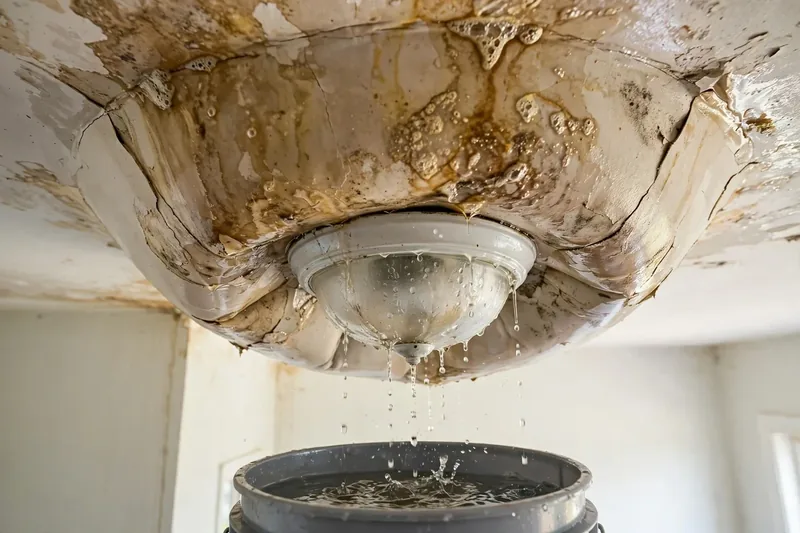
Water Dripping From a Light Fixture

Water coming out of a ceiling light, fan or smoke detector is common, because the fixture's hole in the drywall is the easiest path down. It's also the most dangerous version of a ceiling leak.

  • Switch off that circuit at the breaker, not just the wall switch
  • Don't touch the fixture
  • Put a bucket underneath and keep people away
  • Have an electrician check the fixture and wiring once everything is dry
Sagging water-stained ceiling dripping through a light fixture into a bucket

A Bubble in the Ceiling

A bulge or bubble in the ceiling paint means water is trapped behind it. If it's small and you can reach it safely, a small hole at the lowest point with a screwdriver, standing to the side with a bucket underneath, lets the water drain and takes weight off the drywall. If the bulge is large, the ceiling is cracking, or you can't reach it safely, keep everyone out of the room and call for help.

Why Ceiling Leaks Are So Common in Plano Homes

Many two-story homes in Plano and nearby cities have the AC air handler and often the water heater in the attic, directly above bedrooms. Collin County also sees frequent hail that damages roofs. And loose blown-in insulation sits right on the ceiling drywall. Put those together and ceiling leaks are one of the most common water damage calls in the area.

Frequently Asked Questions

Water Coming Through Your Ceiling?

Call (972) 945-2118. We'll find how far the water spread and dry the ceiling and attic. See our Plano water damage restoration page for every service.