| Cause | What happens | Clue |
|---|---|---|
| Burst supply hose | Rubber hoses age, bulge and split under constant water pressure | Water spraying behind the washer, often fast |
| Drain hose pops out | The hose slips out of the wall drain during the spin cycle | Water around the drain box during draining |
| Clogged drain line | Lint and soap build up, and the wall drain overflows | Water at the drain box with every load |
| Overflowing washer pan, or none at all | Pan drain clogged or missing | Water under and around the machine |
| Leaking washer | Internal pump, tub seal or door gasket fails | Small puddles after each load |
| Valve or pipe leak in the wall | Fitting behind the washer box drips | Wet wall, stain below with no washer running |
Upstairs Laundry Leak Water Damage Cleanup in Plano, TX
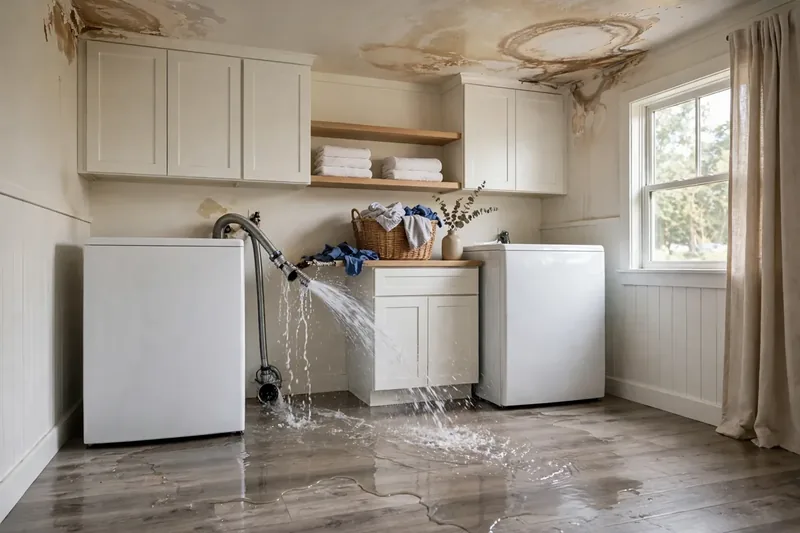
A washer supply hose can release several gallons a minute, and on a second floor that water has only one direction to go: down. It soaks the laundry room floor, runs between the joists and comes through the ceiling of the room below, often a kitchen or living room. Turn off the valves behind the washer now. We'll dry both floors and the hidden space between them in your Plano home.
- Local technicians
- Written scope
- Moisture monitoring
- 24/7 emergency response
Washer Leaking Upstairs? Do This First
- Close the two valves on the wall behind the washer (hot and cold). If they won't turn, shut off the main water.
- Unplug the washer if you can reach the outlet without standing in water; otherwise switch off its breaker.
- Check the room below. Switch off power to any dripping ceiling light and put buckets under drips.
- Keep people out from under a sagging ceiling.
- Soak up surface water upstairs with towels so less goes through the floor.
- Photograph the hose, the floor and the ceiling below.
Why Upstairs Washers Leak
How Laundry Water Travels Between Floors
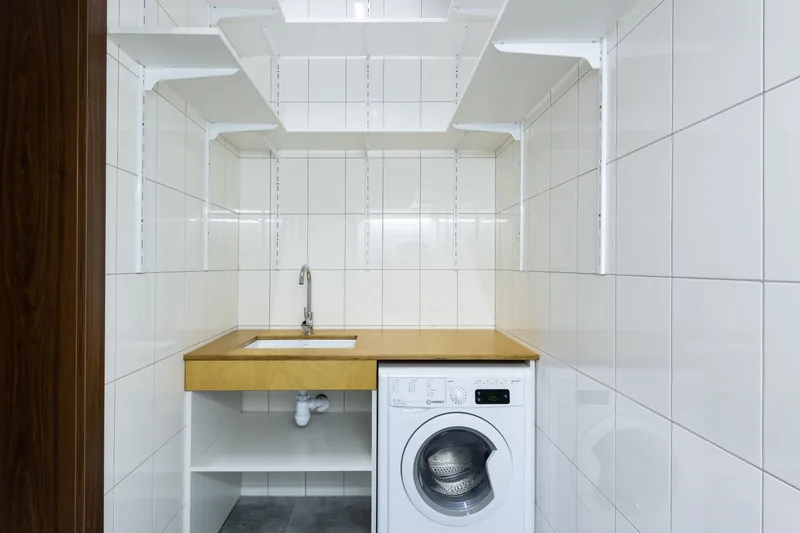
In a two-story home, the laundry room floor sits on a wood subfloor over floor joists. Below the joists is the ceiling drywall of the room underneath. Water from a washer runs through seams in the flooring, soaks the subfloor, spreads along the joist bays and pools on top of the ceiling drywall until it finds a way through, often at a light fixture, vent or drywall seam.
That means three layers usually need attention: the laundry room floor, the subfloor and joist space, and the ceiling below. Drying only the floor you can see leaves water trapped in the middle.
Why This Is Common in Plano and Nearby Cities
Many two-story homes built in Plano, Frisco and Allen since the late 1990s put the laundry room upstairs near the bedrooms. It's convenient, until a hose fails. Washer water is also considered gray water (Category 2) once it's been through a cycle, so materials it soaks need cleaning, not just drying.
How We Dry After a Laundry Leak
For the ceiling side of this job, see ceiling water damage.
- Confirm the water is off at the washer valves.
- Extract upstairs from the laundry room and any hallway or bedroom carpet it reached. See water extraction.
- Map both floors with moisture meters and thermal imaging to find the wet area in the floor system and the ceiling below; see moisture mapping.
- Open only what's needed in the ceiling below: sagging or soaked drywall comes down in clean sections, which also lets air reach the joists.
- Clean affected surfaces, since washer water is gray water.
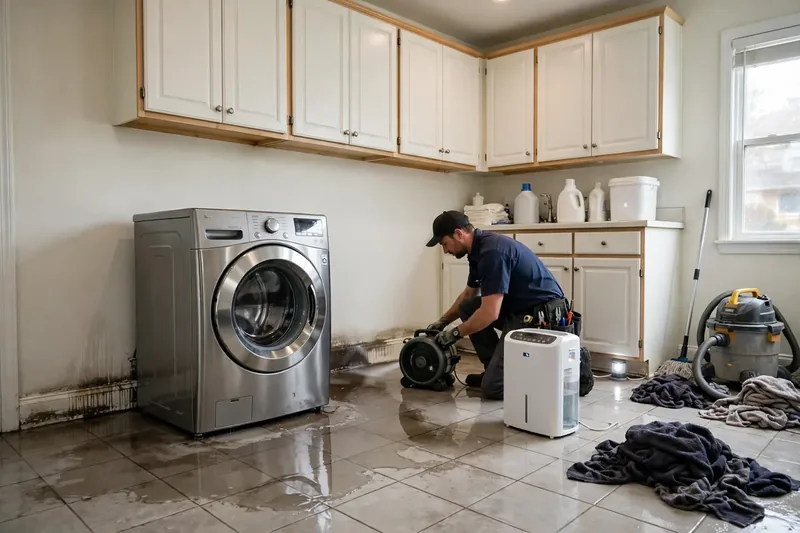
- Dry the floor system from both sides with dehumidifiers, air movers and, where needed, cavity drying. See structural drying.
- Check walls next to the laundry room and below it, then monitor daily until all three layers read dry.
What Can Be Saved After a Washer Leak
| Material | Usually saved when... | Usually replaced when... |
|---|---|---|
| Laundry room tile or vinyl | Water stayed on top | Water got under vinyl plank or laminate |
| Subfloor (plywood or OSB) | Damp, firm, dried quickly | Swollen, soft or delaminating |
| Ceiling below | Firm and only damp | Sagging, stained through or crumbling |
| Hallway or bedroom carpet | Dried within a day or two | Long exposure or odor |
| Baseboards and door trim | Solid wood | Swollen MDF |
| Hardwood in the room below | Caught early and dried; see hardwood floor water damage | Boards stay cupped |
How to Prevent an Upstairs Washer Flood
- Replace rubber supply hoses with braided stainless steel hoses, and replace them every few years
- Install a washer pan with a drain line, if your laundry room doesn't have one
- Add an automatic shut-off valve or a leak sensor that cuts the water when it detects a leak
- Turn off the washer valves when you leave for a trip
- Secure the drain hose in the wall drain so it can't jump out during the spin cycle
- Clean the lint trap and drain line if water backs up during draining
Laundry Leak Cleanup Across Plano
Also Frisco, Murphy and McKinney. See water damage restoration in Plano for every service.
- West Plano: large two-story homes in 75093 and 75024 with second-floor laundry rooms
- Allen: newer two-story homes with upstairs laundry
- Central Plano: remodeled homes that moved laundry upstairs
Laundry Leak FAQs
Several gallons a minute. Left running for an hour, it can put hundreds of gallons into your floors and ceilings.
Water runs through the laundry room floor, along the joists, and pools on the ceiling below until it comes through at a seam, light or vent.
Only sections that are sagging, soaked through or crumbling. Firm, damp drywall can often be dried.
Water from the supply hose starts clean. Water that's been through a wash cycle is gray water and needs cleaning, not just drying.
Usually 3 to 5 days, because both floors and the space between them have to dry.
Many policies treat a sudden hose burst differently from a slow leak. Check your policy; see sudden vs. gradual water damage.
Washer Leak Upstairs? Call Now
Shut off the valves behind the washer and call (972) 945-2118. We'll dry both floors before the damage spreads.