Water Damage Restoration PlanoPlano, TX(972) 945-2118

What Is Moisture Mapping? How Professionals Find Hidden Water

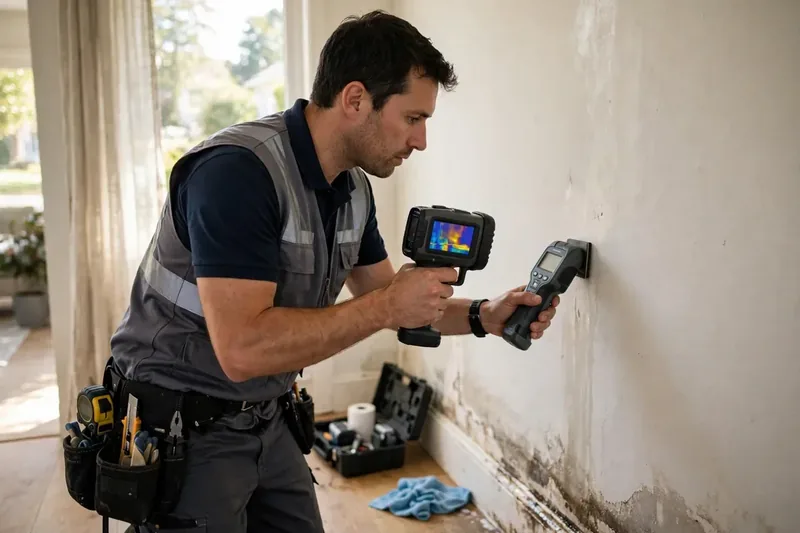
Technician using a thermal camera and moisture meter on a wall
  • Local technicians
  • Written scope
  • Moisture monitoring
  • 24/7 emergency response

Moisture mapping is a measured survey that shows where water is inside a building, how far it has spread and how wet each material is. A technician scans with a thermal camera, confirms suspect areas with moisture meters, and marks every reading on a floor plan. The result is a map of the wet area, used to decide what to dry, what to remove and when the job is truly finished.

Team of workers inspecting a wall indoors

Why Water Needs to Be Mapped

Water doesn't stay where it lands. It wicks up drywall, runs along floor joists, slips under flooring and soaks into insulation, often far from the visible stain. Without measurements, it's easy to:

Mapping replaces guesses with numbers.

  • Dry the wrong area while the real wet spot stays wet
  • Tear out too much, removing materials that could have been dried
  • Tear out too little, leaving moisture behind walls that leads to odor and mold
  • Stop drying too early, because the surface feels dry while the inside isn't

The Tools Behind a Moisture Map

A good moisture map uses all of them. The camera says where to look; the meters say what's actually wet.

ToolWhat it measuresHow it worksStrengthLimitation
Thermal (infrared) cameraSurface temperatureDetects infrared energy; evaporating water often makes wet areas coolerScans whole walls and ceilings fastSees temperature, not water; cold spots can be air leaks or missing insulation
Pinless moisture meterMoisture near the surfaceSends a signal into the material and reads how it respondsFast, leaves no marks, reads through paint and tileReads only to a limited depth
Pin moisture meterMoisture between two pinsMeasures electrical resistance through the materialConfirms depth and exact readings in wood and drywallLeaves tiny holes
Thermo-hygrometerAir temperature and humidityMeasures conditions in the roomShows whether the air can absorb more waterDoesn't measure materials

Dry Standards: What "Dry" Means

There's no single number that means "dry" for every house. Wood, drywall and concrete each read differently, and meters vary by brand and scale. That's why professionals take reference readings on the same materials in an unaffected part of the same building, called a dry standard. A wet area is considered dry when its readings match that reference. This is what lets a moisture map answer the most important question in any water job: is it done yet?

How a Moisture Mapping Visit Works

  • Background: what you've noticed, when, recent repairs, storms or freezes.
  • Dry reference readings in unaffected rooms with the same materials.
  • Thermal scan of walls, ceilings and floors around the suspect area.
  • Meter confirmation of every suspect spot, with pin readings where depth matters.
  • Edge tracing: readings continue outward until dry material is found in every direction.
  • Air readings: temperature and humidity in affected rooms and the attic.
  • Documentation: readings marked on a room sketch, with photos and thermal images.
Worker measuring a wall indoors

Reading a Moisture Map

A moisture map is usually a simple sketch of each room with readings written where they were taken. A typical layout:

During drying, the same spots are measured every day, so you can watch the numbers fall toward the dry standard.

What you'll seeWhat it means
Reference readings in a corner boxThe "dry" values for that home's materials
Numbers on walls, floors and ceilingsReadings at each spot, often with the date
A shaded or outlined areaThe boundary of the wet zone
Arrows or notesWhere the water likely came from and which way it moved
Thermal images with matching photosWhat the camera saw and where
Repeated readings on later datesDrying progress over time

When Moisture Mapping Is Used

In North Texas, mapping is especially useful for slab leaks, where water spreads under flooring, and for AC leaks through the ceiling, where insulation hides how far water traveled.

SituationWhy mapping helps
After any leak or floodFinds the full wet area before deciding what to remove
During dryingShows progress and proves when materials are dry
Musty smell, no visible waterLocates hidden leaks without opening walls
Before buying or selling a homeChecks past leaks and stains on the disclosure
Before new flooring or renovationConfirms subfloor, slab and walls are dry
Commercial and multifamily lossesDocuments each suite or unit separately
Insurance claimsGives a measured record of what got wet

Can You Map Moisture Yourself?

Consumer moisture meters and phone-attached thermal cameras are affordable, and they can tell you whether something is wet. What they can't easily do:

They're useful for checking a single spot. For a real leak, a professional map is worth it.

  • Give readings you can compare across materials without a reference
  • Tell water apart from cold spots caused by air leaks or missing insulation
  • Find the true edge of a wet area behind walls or under flooring
  • Produce documentation an adjuster or contractor will rely on

Moisture Mapping Is Not Mold Testing

Moisture mapping measures water. It doesn't sample air or surfaces for mold. If mold is visible or suspected, a mold assessment is a separate service; in Texas, it's regulated by the Texas Department of Licensing and Regulation. See moisture mapping vs. mold inspection for when you need which.

Frequently Asked Questions

Need Moisture Mapping in Plano?

Our moisture mapping services cover homes and commercial buildings across Plano and nearby cities. Call (972) 945-2118.