| Mitigation | Restoration | |
|---|---|---|
| Purpose | Stop the damage and dry the structure | Return the home to how it was |
| When | Hours to about 5 days after the loss | After drying is confirmed |
| Typical tasks | Extraction, flood cuts, pad and insulation removal, cleaning, drying, monitoring | Drywall, texture, paint, flooring, cabinets, trim, fixtures |
| Who does it | Water damage mitigation specialists | General contractors and trades |
| What success looks like | Moisture readings match dry areas of the home | Rooms are finished and usable again |
| How it's usually billed | Line items for extraction, removal, equipment days, monitoring | Line items for materials and labor to rebuild |
Water Mitigation vs. Water Restoration: What's the Difference?
- Local technicians
- Written scope
- Moisture monitoring
- 24/7 emergency response
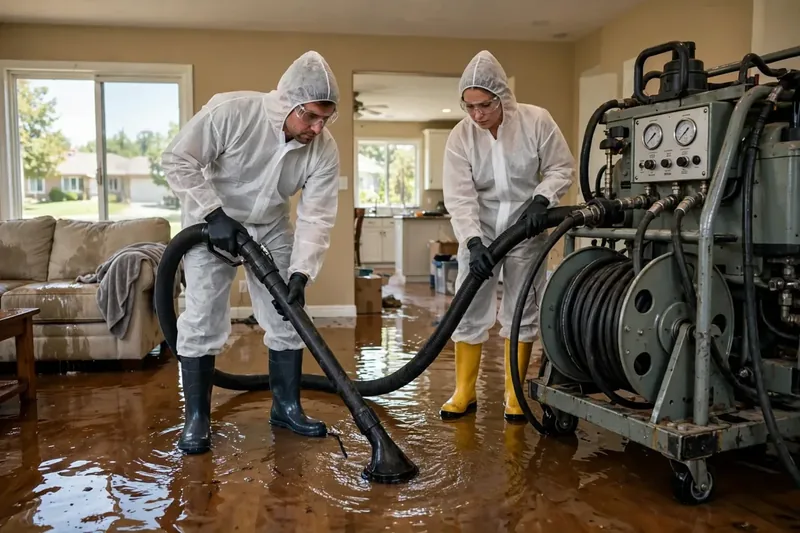
Water mitigation is the emergency work that stops water damage from spreading: extraction, removing materials that can't be saved, and drying the structure. Water restoration is the rebuild that comes after: new drywall, flooring, paint and trim. Mitigation happens in the first days; restoration starts only once everything reads dry. Understanding the difference helps you read estimates, talk to your insurer, and avoid rebuilding over wet materials.
Side-by-Side Comparison
What Mitigation Includes
- Stopping the source or confirming it's stopped
- Inspection and moisture mapping to find every wet area
- Water extraction from carpet, pad and hard floors
- Removing what can't be dried: soaked pad, swollen trim, wet insulation, sections of drywall
- Cleaning and antimicrobial treatment when the water was gray or black
- Structural drying with dehumidifiers and air movers, measured daily
- Contents protection, including pack-out when needed
- Documentation: photos, readings, equipment logs and a scope of removed materials
What Restoration Includes
- Replacing drywall that was cut out, then taping, texturing and painting
- Installing new carpet pad, carpet, hardwood or tile
- Replacing baseboards, door casings and trim
- Rebuilding or replacing cabinets and countertops if they were removed
- Re-insulating walls and attics
- Reinstalling fixtures, outlet covers and finishes
- Final cleaning and walkthrough

Why the Order Matters
Restoration should never start until mitigation is finished and the structure is confirmed dry. Rebuilding over wet framing or a damp slab traps moisture behind new drywall and under new flooring. That leads to:
The moisture log from mitigation is your proof that it's safe to rebuild.
- Musty odors that appear weeks later
- New flooring that cups, buckles or loosens
- Paint that bubbles and stains that bleed through
- Mold growth inside walls
- A second claim, which can be harder to get paid
A Typical Timeline
For more on drying times, see how long it takes to dry out a house.
| Stage | Typical timing | What's happening |
|---|---|---|
| Emergency response | Day 1 | Source stopped, water extracted, wet materials removed, drying set up |
| Drying and monitoring | Days 1 to 5 (longer for hardwood or slabs) | Daily readings, equipment adjusted |
| Dry sign-off | When readings match dry areas | Moisture log and scope handed over |
| Insurance review | Varies | Adjuster reviews mitigation documentation and the rebuild estimate |
| Restoration | Days to weeks | Contractor rebuilds what was removed |
How Insurance Sees the Two Stages
Insurers usually look at mitigation and restoration separately. Mitigation shows up as emergency services: extraction, removal, equipment days and monitoring. Restoration shows up as the cost to rebuild. Many policies expect you to mitigate promptly to prevent further damage, and the documentation from mitigation supports both parts of the claim. Coverage depends on your policy and the cause; see sudden vs. gradual water damage in Texas.
Can One Company Do Both?
Some companies only mitigate; some do both; some only rebuild. There are good reasons either way:
Whichever you choose, make sure the mitigation company gives you a complete record of what was removed and the final dry readings. That scope is what any contractor needs to price the rebuild accurately.
| One company for both | Separate companies |
|---|---|
| One point of contact | Specialists in each stage |
| Smooth handoff from drying to rebuild | You can choose your own contractor for the rebuild |
| Scope already known | Easier to compare rebuild bids |
Common Mistakes to Avoid
- Skipping mitigation and going straight to repairs, leaving water in walls and subfloor
- Waiting for the adjuster before starting to dry; most policies expect prompt action
- Rebuilding without dry readings from the mitigation company
- Signing over your claim or anything you don't understand under pressure
- Throwing away damaged items before the insurer has seen them or a photo record exists
- Comparing a mitigation quote to a full rebuild quote as if they were the same job
How Mitigation Affects the Rebuild Cost
Good mitigation shrinks the rebuild. Drying cabinets in place instead of replacing them, saving hardwood with drying mats, and making short flood cuts instead of removing whole walls can mean the difference between a few days of repairs and weeks. Fast, measured drying is usually the biggest single factor in the total cost. See water damage restoration cost for national ranges.
Frequently Asked Questions
The emergency stage that stops water damage from spreading: extraction, removal of wet materials, cleaning and drying.
The rebuild after drying: drywall, paint, flooring, cabinets and trim.
Mitigation. Restoration should only start once materials read dry.
Often, as part of a covered loss. It depends on your policy and the cause.
Usually 3 to 5 days for clean water; longer for hardwood, concrete or dirty water.
If materials were removed, yes. Sometimes mitigation alone is enough when everything can be dried in place.
Start With Mitigation
Our water mitigation team stops the damage and documents everything your contractor needs. Call (972) 945-2118.