| Time | What to do | Why it matters |
|---|---|---|
| Minutes 0 to 5 | Shut off the water at the source or the main | Every minute of running water adds gallons to clean up |
| Minutes 5 to 10 | Turn off power to wet rooms; keep people away from sagging ceilings | Water and electricity, and falling drywall, are the main injury risks |
| Minutes 10 to 20 | Move valuables, electronics and rugs; lift furniture off wet floors | Keeps contents dry and prevents stains on carpet |
| Minutes 20 to 30 | Photograph and video everything before cleanup | Your insurance company will want to see the damage as it was |
| Minutes 30 to 45 | Remove surface water you can safely reach on hard floors | Less water soaking into drywall and subfloor |
| Minutes 45 to 60 | Call a plumber if needed, and a water damage company for drying | Drying equipment needs to start the same day |
What to Do in the First Hour After Water Damage
- Local technicians
- Written scope
- Moisture monitoring
- 24/7 emergency response
The first hour after water damage decides how much of your home can be dried instead of torn out. In that hour you need to do four things, in order: stop the water, make the area safe, protect what you can, and document everything. This guide walks through each step, minute by minute, with what to do differently depending on where the water came from.
The First Hour, Minute by Minute
Step 1: Stop the Water
The fastest way to limit damage is to stop new water. How you do it depends on the source:
- Burst or leaking pipe: shut the main water valve. Our guide to finding your main water shut-off valve shows where it usually is in North Texas homes.
- Toilet overflow: turn the small valve behind the toilet clockwise. Lift the tank lid and raise the float to stop the fill.
- Washing machine: close the hot and cold valves behind the washer.
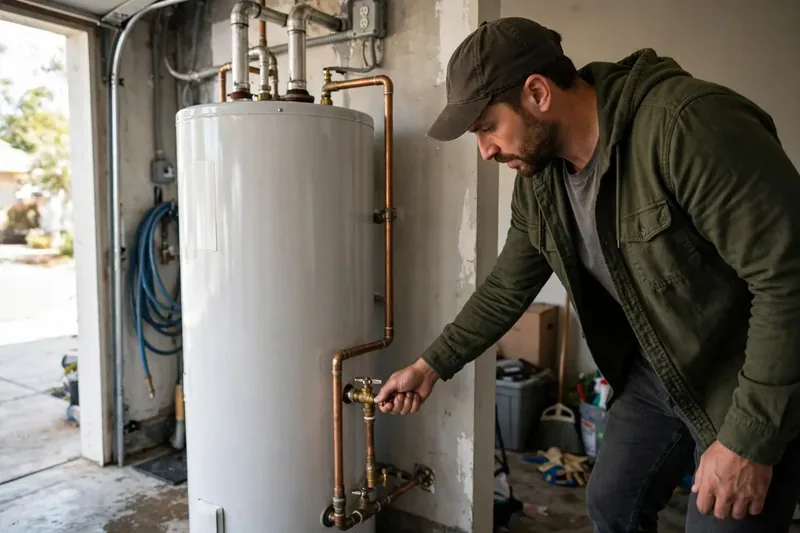
- Water heater: close the cold-water valve on top of the tank and turn the heat source off.
- AC leaking through the ceiling: turn the AC off at the thermostat.
- Rain or storm water: you can't shut it off, but you can move belongings away from doors and block gaps with towels.
Step 2: Make It Safe
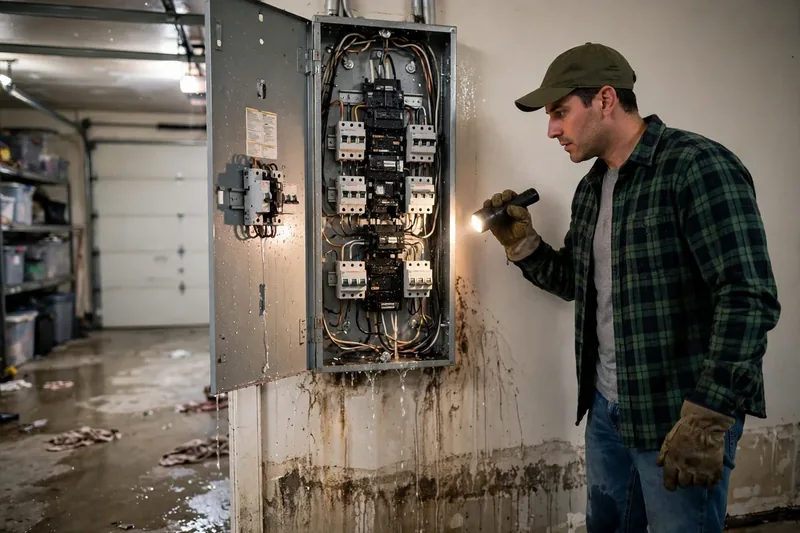
- Electricity: switch off breakers for rooms where water has reached outlets, cords, baseboard heaters or ceiling fixtures. If you'd have to stand in water to reach the panel, don't.
- Ceilings: a bulging or sagging ceiling can fall. Keep everyone out from under it.
- Dirty water: water from a toilet with waste, a sewer backup or outside floodwater carries bacteria. Keep children and pets away and wear boots and gloves if you have to go in.
- Gas: if water reached gas appliances or you smell gas, leave and call 911 and your gas company.
- Slips: wet tile and hardwood are slippery. Move slowly.
Step 3: Protect Your Belongings
- Lift furniture onto wood blocks, plastic containers or aluminum foil so legs don't soak up water or stain the carpet.
- Move electronics to a dry room. Don't turn on anything that got wet.
- Pick up rugs and anything on the floor: shoes, boxes, books, papers.
- Remove art and photos from walls near the water.
- Open drawers and cabinet doors in wet areas so they can start drying.
- Freeze wet documents and photos in plastic bags if they're important; a document drying specialist can often save them later.
Step 4: Document Everything for Insurance
Before you clean, photograph. Adjusters want to see the damage as it was, not after it's been mopped up.
Keep damaged items until your insurance company says you can discard them. Our guide to sudden vs. gradual water damage in Texas explains how policies usually treat different kinds of leaks.
- Wide shots of every affected room, from the doorway
- Close-ups of the source: the burst pipe, the failed hose, the overflowing toilet, the stained ceiling
- The water line on walls, furniture and cabinets
- Damaged belongings, before you move or throw anything away
- A short video walking through the house, narrating what you see
- The time you discovered the water, written down
Step 5: Remove What Water You Safely Can
On tile, vinyl or sealed concrete with clean water, mops, towels and a wet vacuum help. Stop there. Don't try to dry carpet, walls or ceilings yourself with fans. They dry the surface while water stays trapped in carpet pad, drywall and subfloor. Professional water extraction pulls water out of pad and flooring, and moisture meters show where it's hiding.
What Not to Do in the First Hour
| Don't | Why |
|---|---|
| Use a household vacuum on water | It isn't built for water and can shock you |
| Turn on wet electronics or appliances | Short circuits and damage |
| Walk on a sagging ceiling's floor above, or stand under it | It can collapse |
| Use heaters or hair dryers on wood floors | Uneven drying causes cracking and cupping |
| Throw away damaged items right away | Your insurer may need to see them |
| Wait until morning to call | Drying that starts the same day saves more materials |
| Touch sewage or flood water without protection | It carries bacteria and viruses |
Clean Water, Gray Water or Black Water?
The kind of water changes what you can safely do and what can be saved.
Clean water doesn't stay clean. Within a day or two in a warm house it picks up bacteria from carpet and drywall. See sewage cleanup if the water came from a drain or toilet.
| Type | Common sources | First-hour advice |
|---|---|---|
| Clean (Category 1) | Supply line, ice maker, water heater, burst pipe | Safe to mop hard floors; act fast before it gets dirtier |
| Gray (Category 2) | Washer or dishwasher discharge, AC condensate | Wear gloves; don't let it sit |
| Black (Category 3) | Sewer backup, toilet with waste, storm water from outside | Stay out; keep kids and pets away; call for professional cleanup |
When to Call a Professional
Call the same day if any of these are true:
Professional water mitigation stops the damage from spreading: extraction, removal of what can't be saved, and structural drying monitored with daily readings.
- Water reached carpet, drywall, cabinets or a ceiling
- More than one room is affected
- The water came from a toilet, sewer or outside
- A ceiling is sagging or dripping
- You can't find or stop the source
- The water sat for more than a few hours
Frequently Asked Questions
Stop the water, then turn off power to wet areas. Everything else comes after those two steps.
Damage starts immediately. After 24 to 48 hours, mold growth becomes likely and more materials need to be removed.
Stop the water and take photos first, then call both. Starting drying quickly is part of preventing further damage.
Usually, if the water was clean, power to wet rooms is off and no ceiling is sagging. Leave affected rooms if it was sewage or floodwater.
Fans help with surface water on hard floors, but they can't dry water trapped in pad, walls or subfloor.
Water in Your Plano Home Right Now?
Call (972) 945-2118. We'll walk you through these steps on the phone and start drying the same day. Learn more on our Plano water damage restoration page.